



모두를 위한 TOP(액세서빌리티)
도쿄도 사진미술관은 누구나 즐겁고 편안하게 머물 수 있는 장소가 되기를 바랍니다. ‘액세서빌리티(Accessibility)’라는 말에는 ‘누구나 사용하기 쉽다’는 뜻이 담겨 있습니다. 사람마다 신체 기능이나 움직임이 다르고, 정보를 이해하고 느끼는 방식도 다릅니다. 본 미술관에서는 누구나 쉽게 ‘가고 싶고, 보고 싶고, 알고 싶은’ 것을 실현할 수 있게 하겠습니다. (이 페이지는 많은 분들이 읽을 수 있도록 가능한 한 쉬운 한국어를 사용하여 작성되었습니다.)
도쿄도 사진미술관에 오신 것을 환영합니다
수어와 자막과 음성으로 안내하는 영상
안내자가 도쿄도 사진미술관에 오시는 방법과 시설에 관해 안내하는 영상입니다. (일본어)
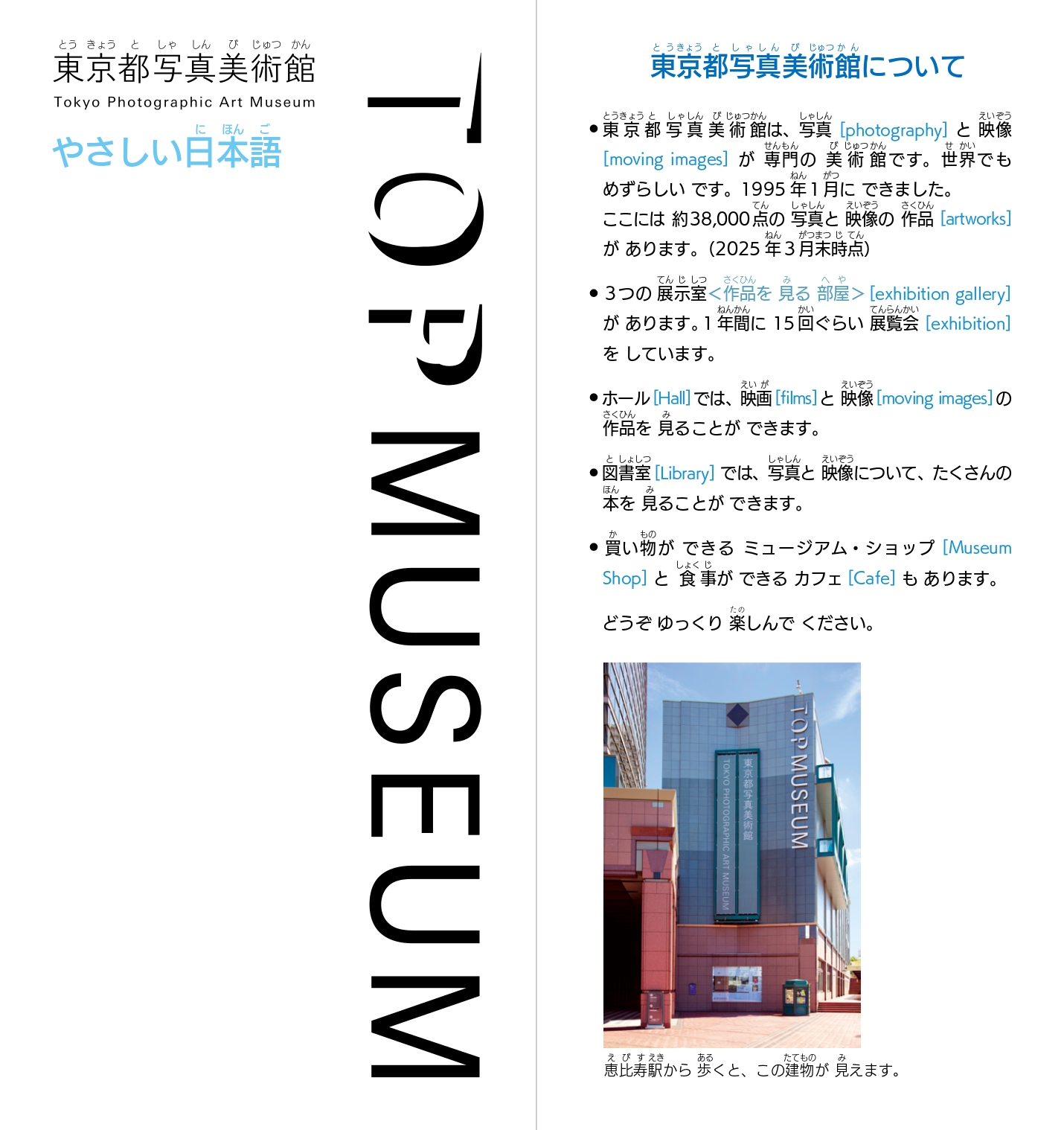
쉬운 일본어 안내 팸플릿
요금・할인
배리어프리(무장벽) 이동 경로
경로 안내
JR ‘에비스’역과 도쿄메트로 ‘에비스’역에서 미술관까지 오시는 방법이 ‘오시는 길’ 페이지에 기재되어 있습니다. 휠체어로 이동하기 편리한 ‘배리어프리 경로’와 사진을 이용한 안내, 그리고 시각장애인을 위한 음성 길 안내가 있습니다
오시는길
장애인 우선 주차장
휠체어 사용자 및 차를 타고 내릴 때나 이동할 때, 넓은 공간이 필요한 분들을 위한 장애인 우선 주차장이 마련되어 있습니다. 넓이는 자동차 1대 분량(가로폭 220cm × 세로폭 630cm)의 공간입니다. 이용 시 장애인수첩 등 관련 증명서를 보여 주세요. 이용료는 무료이며, 방문 전에 이용 가능한지 전화로 확인해 주시기 바랍니다.
전화: 03-3280-0099

휠체어 전용 승강기
장애인 우선 주차장과 미술관 남쪽 출입구로 가는 계단 사이에 있습니다. 이용하실 때는 승강기 근처에 있는 인터폰으로 직원을 불러 주세요.
미술관 내 배리어프리 설비
층별 안내도
보조견
미술관에는 시각장애인, 청각장애인, 지체장애인 등을 위한 보조견과 함께 입장하실 수 있습니다.

경사로·자동문·점자블록
미술관 출입구와 전시실 출입구는 모두 자동문입니다. 홀 출입구까지는 휠체어가 통과할 수 있는 경사로가 설치되어 있습니다. 미술관 내부 통로에는 점자블록이 있습니다. 하지만, 홀, 스튜디오, 전시실, 도서실, 카페 내부에는 점자블록이 없습니다.
엘리베이터
휠체어에 탄 채로 이용할 수 있는 엘리베이터가 2대 있습니다.
왼쪽 엘리베이터는 지하 1층부터 4층까지, 오른쪽 엘리베이터는 지하 1층부터 3층까지 운행합니다.
엘리베이터 문은 중앙에서 양쪽으로 열립니다. 출입구의 크기는 폭 110cm × 높이 210cm입니다.
음성 안내가 제공되며, 버튼에는 점자가 표시되어 있습니다.
엘리베이터 내부 크기는 가로폭 200cm × 세로폭 170cm × 높이 240cm입니다. 정면에는 거울이 있고, 3방향에 손잡이가 설치되어 있습니다.
다목적 화장실
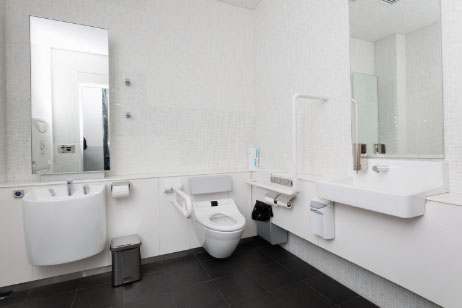
모든 층에 있습니다. 출입구는 자동문이며, 휠체어와 유모차도 들어갈 수 있습니다. 1층 다목적 화장실은 오스트메이트(장루·요루) 환자도 이용할 수 있습니다.
위치는 ‘유니버설 가이드북’을 참조해 주시기 바랍니다.
유니버설 가이드북 [pdf
1.8mb](仅提供日语版)
휠체어·보행 보조기
자주식·보호자 겸용 휠체어와 보행을 돕는 보조기를 대여해 드립니다. 미술관 내부에서 이용할 수 있고, 이용료는 무료입니다.
다른 이용자가 사용 중일 수 있으며, 사전 예약은 할 수 없습니다.
이용을 원하시는 경우 1층 종합 접수처에서 문의해 주시기 바랍니다.

휠체어 전용 공간(1층 홀)
1층 홀에는 휠체어 사용자를 위한 전용 공간이 있습니다.
휠체어 3대가 동시에 이용할 수 있으며, 넓이는 가로폭 252cm × 세로폭 89cm입니다.

쿠션(1층 홀 등)
좌석에 앉을 때 몸을 편안하게 지지할 수 있게 쿠션을 대여해 드립니다. 이용을 원하시면 홀 접수처에서 문의해 주시기 바랍니다.
접수처 안내 서비스
다국어 지원
1층 종합 접수처에는 영어, 중국어, 한국어로 안내가 가능한 직원이 있습니다.
필담기(글로 써서 의사소통할 수 있는 기기)
1층 종합 접수처, 각 층 접수처, 도서실 카운터에 비치되어 있습니다.

UD토크(대화를 문자로 바꿔주는 앱)
1층 종합 접수처를 비롯하여 각 층 접수처와 도서실 카운터에서 UD토크를 통한 안내 서비스를 제공하고 있습니다.
UD토크는 음성을 문자로 바꾸어 의사소통을 돕는 앱입니다.
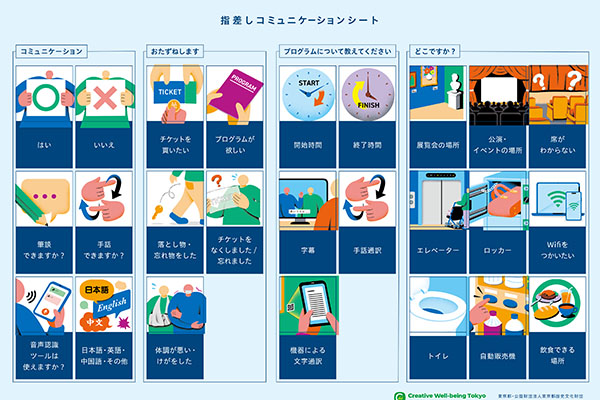
손가락으로 가리켜 말하는 커뮤니케이션 시트
말로 의사소통하기 어려운 분도 커뮤니케이션 시트를 손가락으로 가리켜 직원에게 질문할 수 있습니다. 시트는 1층 종합 접수처와 홀 접수처에 비치되어 있습니다.
서포트 스태프
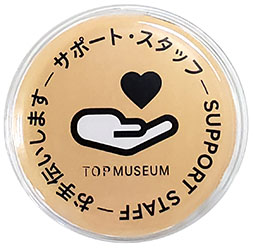
불편한 점이나 궁금한 사항이 있으시면 1층 종합 접수처에 있는 서포트 스태프에게 문의해 주세요. 서포트 스태프 배지를 부착하고 있습니다.
관람 지원
문자 표시 지원 갤러리 토크
미술관에서는 학예사가 전시의 주요 내용을 소개하는 ‘갤러리 토크’를 진행합니다. 이 갤러리 토크에 문자 표시 지원을 제공하는 날이 있습니다. 소유하신 스마트폰으로 2차원 바코드를 스캔하면 학예사가 설명하는 내용이 문자로 표시되는 페이지에 연결됩니다. 약 30개 언어로 표시됩니다.
수어 통역・문자 표시 지원 갤러리 토크 연간 일정(일본어)
퍼블릭 프로그램
어린이부터 어른까지 함께 즐길 수 있는 워크숍이나 장애가 있는 분들도 안심하고 참여할 수 있는 프로그램입니다.
교육 보급 프로그램 퍼블릭 프로그램(일본어)

올 웰컴 데이(TOP 자원봉사자의 관람 지원)
미술관에서 편안하고 즐겁게 지낼 수 있도록 TOP 자원봉사자가 관람을 지원합니다. 미술관의 설비와 도구를 활용하여 약 1시간 동안 개별적으로 관람을 도와드립니다. 이용료는 무료입니다. 언어는 기본적으로 일본어로 진행됩니다.
올 웰컴 데이 연간 일정(일본어)

도서실 이용 방법 안내 [도서실]
확대 독서기·돋보기 [도서실]
확대 독서기는 카메라 밑에 책을 놓으면 글자와 사진을 화면에 크게 확대시켜 보기 쉽게 해주는 기기입니다. 흰색과 검은색 화면을 반대로 표시할 수도 있습니다. 돋보기는 2배, 4배, 7배의 세 종류가 있습니다. 확대 독서기와 돋보기는 모두 도서실 내에서만 이용할 수 있습니다. 이용을 원하시면 도서실 카운터에서 문의해 주시기 바랍니다.

히어링 루프 [홀]
히어링 루프는 보청기나 인공와우(달팽이관)에 내장된 자기 유도 코일과 연결하여 소리를 더 선명하게 들을 수 있도록 돕는 시스템입니다.
1층 홀에서 열리는 상영회나 토크 이벤트 시 이용할 수 있습니다.
이용 전에 사용 중인 보청기 또는 인공와우에 텔레코일(T 모드) 전환 스위치가 있는지, 또는 텔레코일을 사용할 수 있는 프로그램이 있는지 확인해 주세요. 보청기를 착용하지 않는 분은 수신기를 대여해 드립니다.
이용을 원하시면 1층 홀 접수처에서 문의해 주시기 바랍니다.

영유아를 동반한 관람
수유실
1층 다목적 화장실 옆에 있습니다. 유모차를 탄 채로 들어갈 수 있습니다.
잠금이 가능한 개별 공간이며, 의자 2개와 테이블과 기저귀 교환대가 놓여 있습니다.
세면대에는 온수가 나오는 수도꼭지가 있어 분유를 탈 수 있습니다.

기저귀 교환대
1층 수유실과 각 층의 다목적 화장실 안에 설치되어 있습니다.
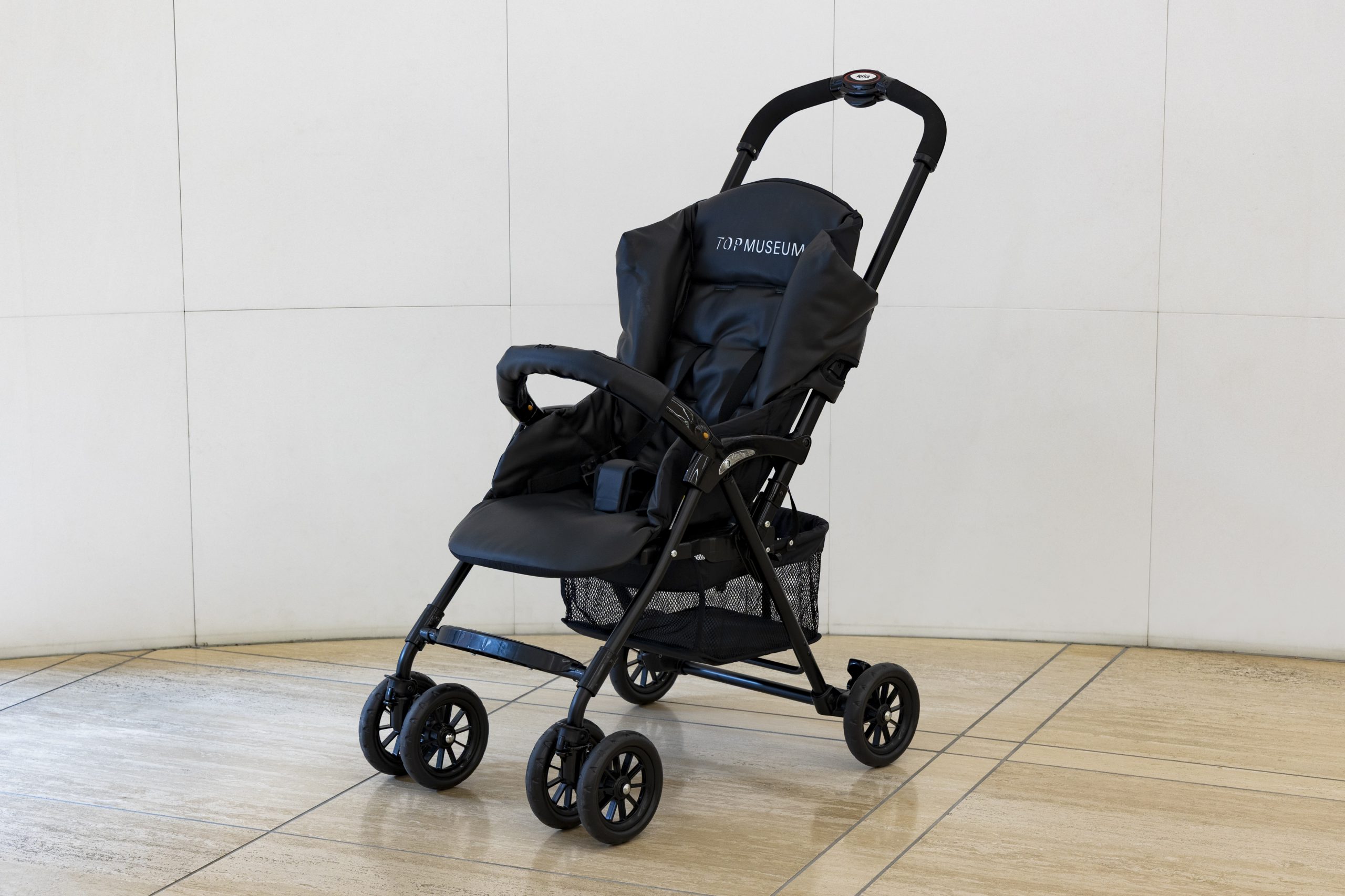
유모차
유모차를 대여해 드립니다. 미술관 내부에서 이용할 수 있으며, 무료입니다.
다른 이용자가 사용 중일 수 있으며, 사전 예약은 할 수 없습니다.
이용을 원하시면 1층 종합 접수처에서 문의해 주시기 바랍니다.
쾌적하고 편안한 이용을 위해
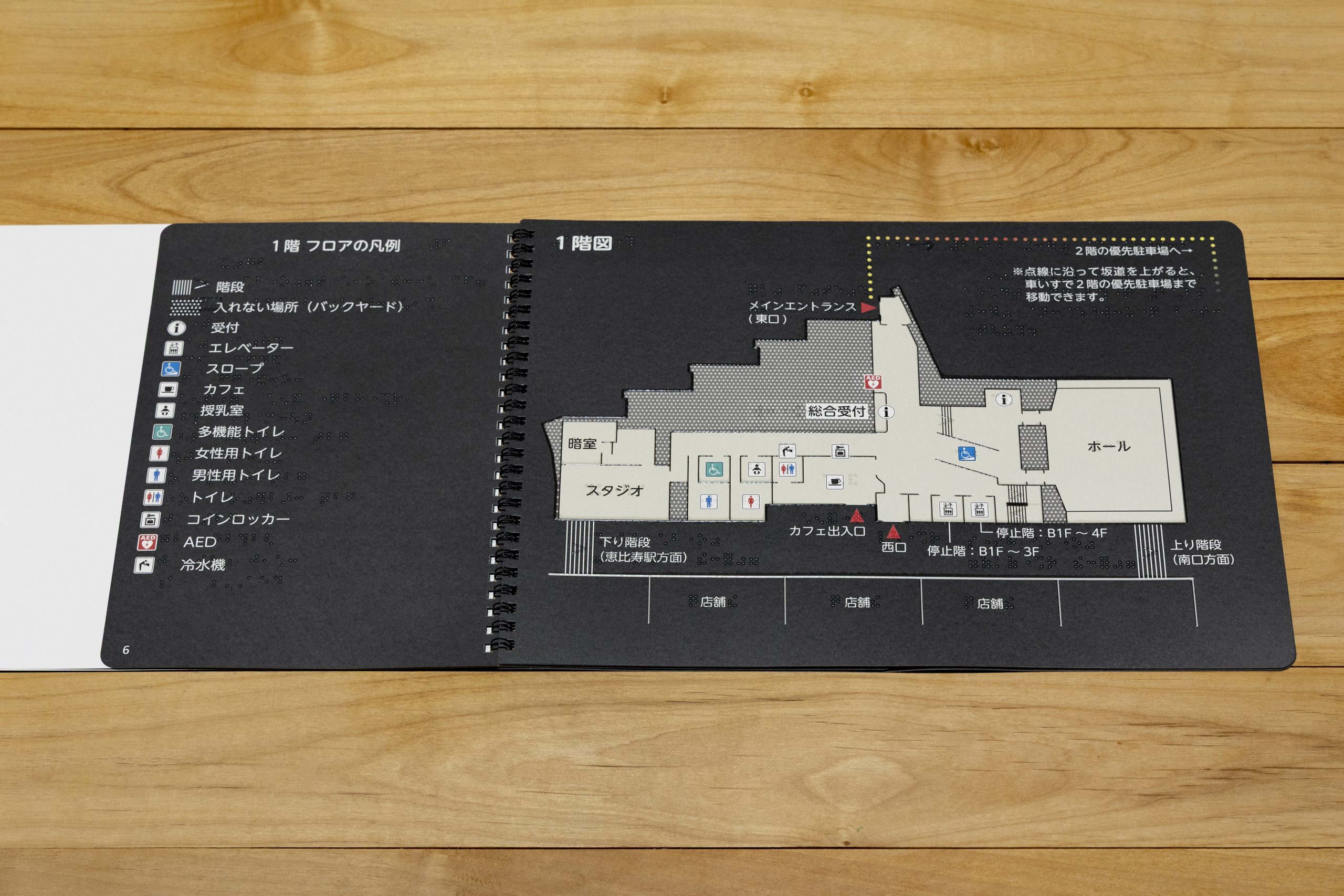
촉지 안내도
시각장애인이 손으로 만져 읽을 수 있도록 점자와 돌출선 등으로 인쇄된 지도를 대여해 드립니다.
이용을 원하시면 1층 종합 접수처에서 문의해 주시기 바랍니다. (일본어 점자)
쉼터 공간
2층 로비에 테이블, 의자, 벤치가 마련되어 있습니다. 1층과 3층 로비에도 벤치가 있습니다.
몸 상태가 좋지 않을 때 쉴 수 있는 공간도 있습니다.
이용을 원하시면 각 층 접수처 또는 가까이에 있는 직원에게 문의해 주시기 바랍니다.

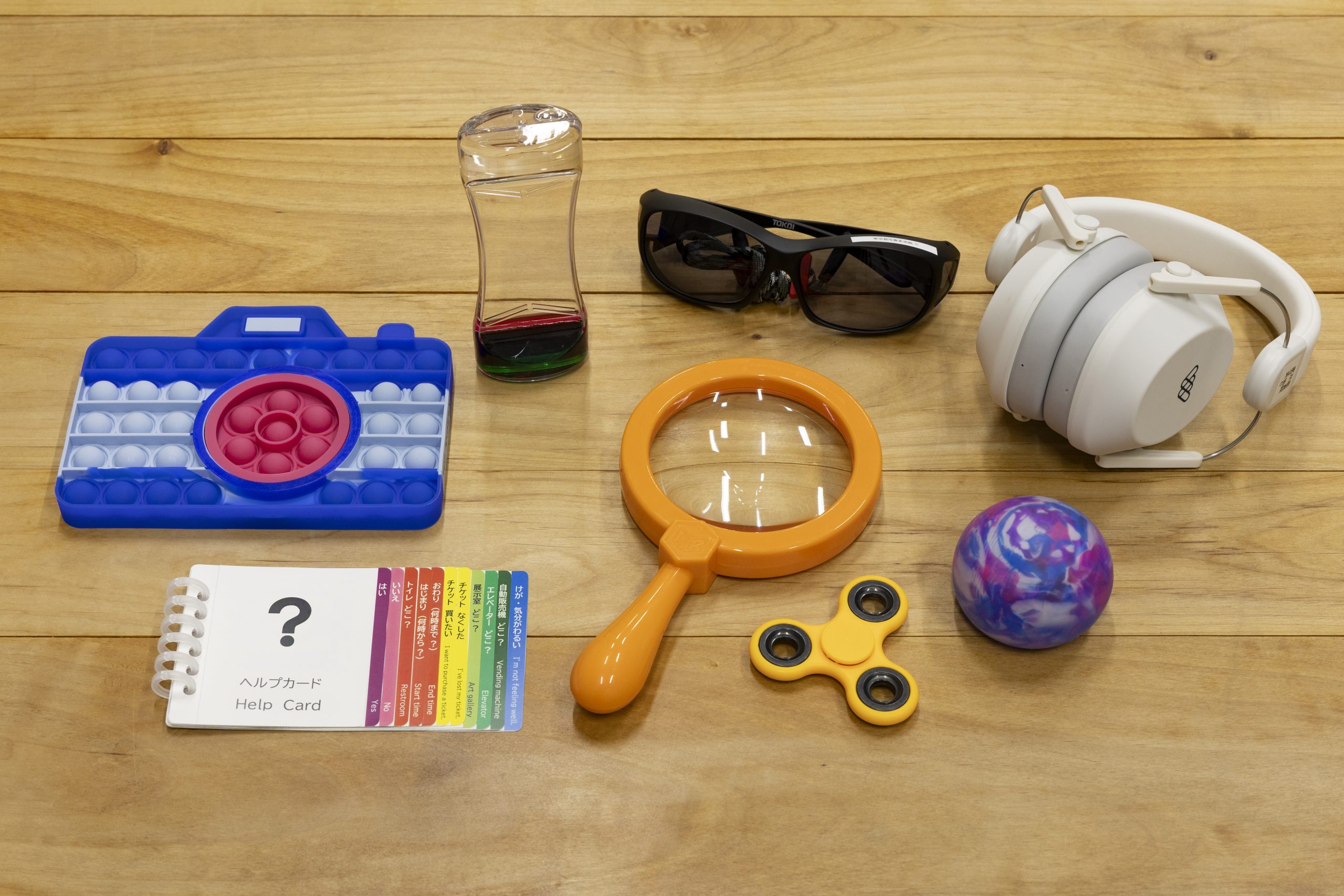
센서리 키트(감각 지원 도구)
소리나 빛에 민감한 분이 미술관에서 편안한 시간을 보낼 수 있도록 지원하는 도구를 대여해 드립니다.
소리 자극을 줄여주는 이어머프와 빛 자극을 줄여주는 안경 등이 가방 안에 들어 있습니다.
이용을 원하시면 1층 종합 접수처에서 문의해 주시기 바랍니다.
식수대(냉수)
지하 1층, 1층, 2층, 3층에 설치되어 있습니다. 각 층에 2대씩 있으며, 낮게 설치된 식수대는 휠체어를 타신 분도 이용할 수 있습니다.

AED(자동심장충격기)
1층 종합 접수처 옆과 3층 로비에 설치되어 있습니다.
유니버설 가이드북
미술관의 배리어프리 설비에 관해 설명하는 안내 책자입니다.
도쿄도 사진미술관 유니버설 가이드북[pdf
1.8mb] (일본어)

문의
불편한 점이나 궁금한 사항이 있으시면 문의해 주세요.
전화: 03-3280-0099
미술관 내부의 상황이나 전시 내용 및 설비, 또는 직원의 상황 등에 따라 모든 요청에 부응해 드리지 못할 수도 있음을 양해 부탁드립니다.