
総合開館30周年記念スペシャル
総合開館30周年記念 トークセッション 写真・映像とこれからの30年
美術館のコレクション・ケア:レジストラーと美術輸送の視点から見るコレクションの現在とこれから
日時:
2025年11月2日(日)14:30-16:30
登壇者:
小川絢子(国立国際美術館主任研究員レジストラ―)
筧奈雅子(国立西洋美術館主任研究員)
相澤邦彦(ヤマト運輸(美術)スペシャルアドヴァイザー/コンサヴァター)
堀田文(東京都写真美術館レジストラー、モデレーター)
レジストラーの役割と日本の現状
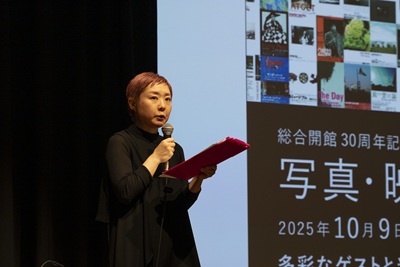
堀田文(以下堀田): 皆さま、本日は「美術館のコレクション・ケア:レジストラーと美術輸送の視点から見る現在とこれから」にご参加いただき、ありがとうございます。東京都写真美術館は今年で総合開館30周年を迎え、現在約3万8千点の作品・資料を所蔵しています。これらをより専門的に管理するため、今年4月にレジストラー職を新設しました。
レジストラーは、作品の収蔵や移動の手続き、作品情報の整理など、コレクション運用の基盤を担う専門職です。海外の美術館では、保存修復や科学分析、輸送などの担当が細分化され、多職種が連携して管理体制を支えています。
一方で国内では、学芸員が展示企画と管理保存の双方を兼任する体制が長く続いてきました。しかし近年、国立西洋美術館の保存科学部署や、国立国際美術館・横浜美術館のレジストラー配置など、徐々に専門職の整備が進みつつあります。気候変動や国際輸送の増加により、作品管理の専門性はこれまで以上に重要になっています。
本日は、そうした現場で活動されている三名の方をお招きし、コレクション・ケアの現在と今後のあり方について伺います。
現代美術のコレクション・ケアにおける情報の集約と共有の課題
小川絢子(以下小川):国立国際美術館(NMAO)は大阪にあり、1977年に開館し、2004年に移転、完全地下型の美術館として再オープンしました。国内外の現代美術を中心とした作品を収集・保管・展示しており、所蔵作品数は2025年3月末時点で8,241点です。現代美術を扱う美術館ということもあり、近年は映像作品やインスタレーション作品がかなり増えてきています。
当館の管理体制は、絵画室や彫刻室といったジャンル別ではなく、企画室や美術室といった「業務内容」による分掌になっており、レジストラーは美術室に所属しています。美術室は、コレクションに関するあらゆることの取りまとめを担う部門として位置づけられています。
レジストラーの業務は大きく分けると二つあります。ひとつはフィジカルな作品本体を管理する仕事、もうひとつはそれに付随する情報を管理する仕事です。
2015年に専任レジストラーとして着任した当時は、外部からの問い合わせや貸し出し依頼の窓口は分散していました。また、ジャンル別の管理体制ではないため個々の作品の情報を知りたいと思ったとき、「誰に問い合わせればいいのか」が分かりにくい状況でした。そこでまず、作品と作品に付随する情報の「ハブ」としてレジストラーが立つ体制をつくり、情報を一ヶ所に集約することから始めました。貸し出し対応(クーリエ業務を含む)、情報管理、修復、環境管理、展覧会ケアなど、業務範囲は多岐にわたります。また、当館にはコンサバターが不在のため、修復のバックグラウンドを持つ私が、本来コンサバターが担当するであろう作業の一部も兼任しています。
この10年間で、「まず私のところに問い合わせが来る」という流れと、情報を取りこぼさず蓄積していく「集約」の構造はかなり確立されてきました。一方で、ここ数年、新たな課題も見えてきています。例えば、所蔵作品の展示方法を記録した写真などは、データ容量の都合で所蔵品管理システムには登録せず別管理していますが、そのデータを活用する職員が限られていることや、近年は情報が生まれるスピードに処理が追いつかず未登録データが溜まってしまい、結果として特定の人だけが知っている「属人的な情報」になりつつあることへの危機感を強く感じています。
大掛かりな作品管理作業の例として、2023年9月から12月にかけて実施した収蔵庫のLED化工事に伴う作品移動作業をご紹介します。平面作品を中心に収納している収蔵庫2室の工事を行うため、休館期間を設けて約4,500点の作品を一時的に館内の展示室に移動させました。収蔵庫が空になる貴重なタイミングなので、IPM(総合的有害生物管理)の専門業者による徹底的に壁面、天井、床板下まで清掃し、カビや害虫発生のリスクを下げることができました。
あわせて収納の見直しも行い、作品収納箱への統一フォーマットのラベル貼付や、棚や壁面に「住所」を振る作業をして、所在管理の改善を図りました。
もう一つ、現代美術を管理・展示する課題の例として、シプリアン・ガイヤール作《Artefacts》の再展示についてご紹介します。この作品は、iPhoneで撮影した動画を35mmフィルムに焼き直し、フィルム映写機で投影するインスタレーション作品です。前回の展示から10年以上展示の機会がなく、展示方法を把握している職員も限られていましたが、「非常の常」展で再展示することになりました。前回はドイツから技師を招きましたが、今回は日本の映写技師に協力をお願いし、まずは10年間動かしていなかった専用の映写機の試運転から始めました。
現代美術作品は、実際に展示してみないと「完成形」が確認できないという難しさがあります。どのような技術を持った人が必要なのか。この設営にいったい何日、何時間かかるのか。そして、それらを実現するためにはどのくらいのコストが発生するのか。こうした情報をあらかじめ把握していないと、そもそも「この作品を展示するかどうか」という判断が困難になってしまいます。
そこで今回は、将来の展示のために必要な人材や技術、設営日数、コスト、作業手順といった情報を、できる限り詳細に記録することに注力しました。フィルム映写機を扱える技術者は現時点ですでに少なく、10年後に同じ知識と経験を持った技師がいる保証はない、という前提に立ち、撤収時には配線の記録や設置マニュアルを写真・文章・動画のかたちで記録しました。技術とノウハウが特定の人だけに留まらず、次世代に継承できるような体制づくりが必要だと強く感じています。
専門家連携によるリスクマネジメントとコーディネーション
筧奈雅子(以下筧):国立西洋美術館(NMWA)は1959年に開館した、西洋美術全般を対象とする唯一の国立美術館です。コレクションは中世から20世紀半ばまでの西洋美術史を概観でき、現在は約7,000点弱を所蔵しています。
当館はジャンル別の組織構造を持ち、とくに「保存修復室」(修復家2名)と「保存科学室」(サイエンティスト1名)が独立部署として存在している点が特徴です。こうした専門性の高い部署が分かれているため、各専門家の知見をつなぐ役割がより重要になっています。
その必要性に応える形で、2022年7月に管理調整室が設置されました。作品の受入れから館内外の移動、貸出や返却まで、作品の「流れ」を一元管理し、記録し、調整することが主なミッションです。作品に関わる業務が増え、判断要素も複雑化する中で、その情報を整理し、全体のバランスを見て調整する「中立的なコーディネーター」が必要とされていた、という背景があります。
作品の受入れに際しては、館に到着した時点から所在地の記録を開始します。収蔵庫、展示室、修復室など、館内外で作品が移動するたびにデータベースの所在地情報を更新します。当館では2008年以来、このデータベースの所在地情報が一般向けウェブサイトに自動的に反映され、「展示中(常設展)」などの表示がタイムリーに切り替わる仕組みを運用しています。来館者の作品検索が大幅にしやすくなるとともに、問い合わせ対応の負担軽減にもつながっています。
展示替えの際には、この作品所在地情報の更新に加え、寄託者の意向や著作権保護期間に基づき、来館者による撮影の可否をチェックする業務も行っています。「撮影禁止」「SNS禁止」といったマークは、この確認に基づいて掲示されます。寄託作品では契約フォーマットを見直し、撮影に関する所蔵者の意向を先に確認する運用に変えたことで、撮影可の作品が増えました。寄託契約を扱う立場から、来館者サービスの向上に寄与できた例だと思います。
貸出業務では、管理調整室が中心となり、館内協議を進めます。キュレーターは「貸出の意義」を検討し、修復家は作品が長距離移動に耐えられるかという“健康状態”を確認し、保存科学室は貸出先の環境やセキュリティをチェックします。この三者の見解を総合したうえで、貸出の可否や条件付き承認の判断が行われます。
貸出契約交渉においては、費用、保険、輸送、セキュリティ、温湿度条件など、リスクに関わる要素を細かく詰めていきます。リスクマネジメントは、実はこうしたペーパーワークの中に色濃く現れます。たとえばポール・ゴーガン《水浴の女たち Women Bathing》の貸出では、作品状態の観点から、直行便での輸送を主催者に交渉し、貸出を実現させました。
ちなみに過去25年間の貸出状況を調査したところ、コロナ禍以降、国内展覧会数と貸出点数の双方が大幅に増えていることが分かりました。国内コレクションの活用が進んでいること、また版画作品の貸出依頼が増えていることなどが背景にあると考えています。美術館を取り巻く環境の変化が、レジストラーの業務にも影響していることが分かります。
当館におけるレジストラーの役割は、関係者間の意見を整理し、最適な判断へ導く「コーディネーション」と、契約や保険等を通じて権利や責任範囲を明確にし、リスクをコントロールする「専門文書業務」の両輪です。私は、レジストラーとは「美術館というドリンクを混ぜるストロー」だという例えに共感します。さまざまな専門家の知見をうまく混ぜ合わせ、コレクションの価値を最大限に生かして人々へ届けるための“媒介者”としての役割が、ますます重要になっていると感じています。
グローバルな視点からのサステナビリティと作品保存の課題
相澤邦彦(以下相澤):今日は、作品輸送や保存・管理の現場でいま何が起きているのか、特に地球環境保護の観点から、世界各地の取り組みを横断的にご紹介したいと思います。
まず輸送車両の面から見ると、環境負荷を下げるための電動化は小型車両では進んでいますが、美術品輸送で使う中型・大型車両となると、技術的なハードルが高く、普及にはまだ時間がかかりそうです。
展覧会に使われる輸送箱(クレート)は、従来は基本的に使い捨てでしたが、資材や廃材を減らす目的で、欧米では繰り返し使用可能な汎用クレートの運用が進んでいます。オランダ(1994年導入、空輸対応)、ドイツ(陸送用、桐材・アプリによる温湿度確認)、スペイン(金属製)、イギリス(市販対応)など、各国で独自の仕様が試されています。長期間使える点がメリットですが、その分重く大きくなり、輸送の燃費が上がるなど、「本当にエコなのか?」という逆説的な問題も指摘されています。このため、作成したクレートを取り置き、加工しながら繰り返し使用する例も少なくありません。ただしいずれにしても、保管場所確保やスケジュール管理の作業が不可欠となります。
加えて、近年はヨーロッパやアメリカの美術館が、輸送時に排出される二酸化炭素量の提出を輸送業者に求めるケースが増えています。GCC(Gallery Climate Coalition)やAIC(American Institute for Conservation)が提供する計算システムがよく使われていますが、計算値はあくまで概算であり、厳密な比較には限界があります。それでも、美術館が「環境負荷を把握し、透明性を担保する」姿勢を示すこと自体が強く求められている状況です。
次に館内環境の話です。省エネの観点から、温湿度管理の許容範囲を広げる動きが世界的に広まっています。国際的な館長ネットワークBIZOTが作成した「グリーンプロトコル」では、温度16~25℃、相対湿度40~60%(24時間変動幅±10%)という、従来より大幅に余裕のある基準が提案されました。従来は20~23℃、50~55%といった非常にタイトな管理が通例でしたので、これは小さくない変化です。ただし素材や作品状態によって対応が大きく異なるため、最終判断は必ずコンサバターの専門的知見に基づき行われます。日本のように寒暖差・乾湿差が極端な環境では特に、作品保存担当者、施設管理担当者、設備技術者、輸送会社など、多職種の密な連携が欠かせません。
作品保存で喫緊の問題になっているのが、燻蒸薬剤です。虫とカビの双方に効果があった「エキヒュームS」は、原材料価格の高騰と環境負荷の観点から2025年3月で製造が中止されました。残された「アルプ」も、将来的に使えなくなる可能性が指摘されています。そのため、今後のカビ対策はIPM(総合的有害生物管理)による予防がより重要になりますが、IPMはあくまで“発生させないための対策”であり、すでにカビが生じてしまった場合には、修復家の処置に頼るしかなくなります。とくに、保存環境が十分でない個人蔵・作家蔵などでは深刻な問題になり得ます。さらに、甚大な水害を伴う自然災害では深刻なカビ被害が生じますが、その対応も大きな課題といえます。
また、コンディションレポートはペーパーレス化が急速に進んでおり、Articheck社のクラウドシステムなどが欧米で広く採用されています。情報の更新や共有が容易になり、現代美術の管理やクーリエ業務の効率化につながりますが、導入コストやセキュリティ、クラウドサービスの持続性といった課題も無視できません。
最後に、サステナビリティと文化財の関係について触れたいと思います。美術品・文化財と地球環境は、どちらも「公共財」「共有財」であり、有限で、代替不可能なものです。美術館・博物館において、環境保護の取り組みは、日常業務に“プラスアルファの負荷”としてのしかかり、予算・人手・時間の不足が常に課題となります。こうした課題は、コンサバターやレジストラーといった専門職の不足によってさらに深刻化します。また、国や館によって取り組みに著しい差があるとすれば、いわゆる“フリーライダー問題”となり、国際的な信頼関係に影響します。今後は環境対応が、美術館の信頼性や、海外との作品貸借に極めて深刻な影響を及ぼす要素にもなりかねません。 とはいえ、こうした課題を踏まえた上でも、まずはできることから少しずつ取り組んでいく、という姿勢自体にも大きな意味があるのではないかと感じています。
まとめ:今後の展望
堀田:ご登壇者の皆様、国内美術館におけるレジストラーの具体的な業務内容や実例、世界的動向や喫緊の課題を共有してくださり、心より感謝申し上げます。
レジストラーを含む専門職の専任者と、物流のプロがいるからこそ、多様な作品展示が実現可能となり、多くの方に展覧会と作品を見ていただくことに繋がっていると、改めて実感いたしました。
この先の30年を見据え、コレクション管理・保存と活用の間に立ちながら、気候変動や情勢変化に対応できるような美術館専門職員が各館に増えること、また、館や国の垣根を越えて情報交換ができるネットワークづくりが可能になることを期待し、皆様と共に活動を続けていければと思っております。本日は長時間にわたりご参加いただき、誠にありがとうございました。
TOP 30th Anniversary Talk Session
The Museum’s Collection Care: The Present and Future of the Collection from the Perspective of a Registrar and Art Transportation
Date:
November 2, 2025, 14:30-16:30
Speakers:
Ogawa Ayako (Senior Registrar, the National Museum of Art, Osaka)
Kakei Nanako (Senior Research Fellow, the National Museum of Western Art)
Aizawa Kunihiko (Yamato Transport (Art) Special Adviser/Conservator)
Hotta Aya (Registrar, Tokyo Photographic Art Museum, Moderator)
The role of the registrar and the current situation in Japan
Hotta Aya (HA): Thank you everyone for joining us in the talk show: “The Museum’s Collection Care: The Present and Future of the Collection from the Perspective of a Registrar and Art Transportation.” The Tokyo Photographic Art Museum, celebrating its 30th anniversary, currently holds a collection of about 38,000 works and archives. We have newly established the registrar department in April this year, to tend to these items with expertise.
The registrar is a specialized occupation that stands at the foundation of collection management; taking care of the storing and shipping of the works, or organizing the information on the works. In museums abroad, the management system works in a team with each a responsibility, subdivided into departments such as conservation and restoration, chemical analysis, or transportation.
In Japan, on the other hand, it was long a common practice for the curator to oversee both the exhibition curation and the management and conservation of the works. Yet the institution of these specialized posts has slowly progressed in recent years, like the National Museum of Western Art’s conservation chemistry department, or the National Museum of Art, Osaka, and Yokohama Museum of Art’s registrar assignments. The expert knowledge of artwork management has become important to a greater extent due to climate change and an increase in international shipments.
Today, we have invited three guests who work hand in hand within such an environment to speak about the present and future of collection care.
The challenge in compiling and sharing information on collection care in contemporary art
Ogawa Ayako (OA): The National Museum of Art, Osaka (NMAO) opened in 1977 in Osaka. It relocated in 2004 and opened as a museum entirely underground. It collects, conserves, and exhibits works from inside and outside of Japan, primarily focusing on contemporary art. As of the end of March 2025, the collection amounts to 8,241 pieces. A museum highlighting contemporary art, we have recently been increasingly collecting moving images and installations.
The management of our museum is not divided by genre—such as paintings or sculptures—but by the nature of the tasks. We have departments, including each of those dedicated to collection management or exhibitions and programs; the registrar belongs to the latter. This department is considered one that handles all things related to the collection. There are two main aspects to the job of a registrar. One is to manage the physical bodies of the work and the other is to manage the information that accompanies them.
When I was appointed as a full-time registrar for the museum in 2015, the portal for external queries or requests for loans was dispersed. It was also very difficult to figure out “who to contact” when looking for information on specific artworks as they were not managed using a system based on genre division. Therefore, I first created a structure where the registrar stands as the hub for the artwork and the information on the artwork, thus gathering data in one place. The job includes tasks like communication for the loan of the works (including shipping arrangements), information management, restoration, environment management, or supervision of works shown at exhibitions. As we do not have a conservator in NMAO, I’m also responsible for the tasks usually conducted by a conservator, as I have experience in conservation.
Over the past 10 years, I was able to appropriately structure the system to contact me before anything and to accumulate all possible information. On the other hand, I have seen some issues arising in recent years. For example, information like photos documenting the exhibition formats for collection works is managed separately, unregistered in the collection management system with a limited data storage capacity. Registration operations thus cannot keep pace with the speed at which information is generated. As a result, non-registered data piles up; I see this as a serious hazard, for it slowly creates exclusive information, only in the heads of certain individuals.
As one example of an extensive task within collection management, I would like to touch on the relocation of works required from September to December 2023, to change the lights in the collection storage to LED. As the construction works were carried out in the two storage rooms where two-dimensional pieces were primarily kept, we closed the museum and moved about 4,500 pieces to the gallery spaces in the building. On this rare occasion during which the storage is emptied, we carried out a thorough cleaning, including every wall, ceiling, and under the floor, using a professional IPM (Integrated Pest Management) service in order to lower the risk of mold and pests.
Together, we did an overview of the storage, unifying the label format on the storage cases, and allocating an “address” to shelves and walls, thus improving the location management.
Another instance in which the management and exhibition of contemporary art saw complications was the re-exhibition of “Artefacts” by Cyprien Gaillard. This is an installation of an iPhone-shot video reprinted onto 35mm film and shown using a film projector. 10 years had passed since its last exhibition and few staff were aware of the setup of the work. Nevertheless, it was going to be re-presented in the exhibition “Prolonged Emergencies.” We had invited a technician from Germany for the last show but this time, we requested assistance from Japanese projection technicians and we began doing test runs on this specialized projector that had not been used in a decade.
Works in contemporary art encompass this difficulty of not being able to define the final display until it is installed. What skills are needed? How many days should we allocate for the installation? And, what is the cost to realize all of it? Without being aware of this comprehensive information, it is difficult to determine whether to show the work or not.
Which is why, for this show, we focused on documenting information such as the necessary staff and skills, duration of installation, cost, and workflow as detailed as possible, for future reference. Even today, very few technicians are able to handle film projectors; we therefore documented the wiring and installation manual with photos, text, and video during the dismantling, on the premise that there might be no technician with the same knowledge and experience in 10 years. I strongly believe in the urgency of building a structure that doesn’t gatekeep the skills and knowledge, and that such information is passed on to the following generations.
Risk management and coordination realized with the teamwork of specialists
Kakei Nanako (KN): Opened in 1959, the National Museum of Western Art (NMWA) is the only national museum handling general Western art. The collection offers an overview of the period between the Middle Ages and the mid-20th century, encompassing approximately 7,000 pieces.
Our museum has adopted a division by genre and can be characterized by the “conservation and restoration department” (2 conservators) and “scientific conservation department” (1 scientist) as independent divisions. The presence of such highly specialized departments necessitated a position to bridge the insights from the specialists.
To respond to this need, an administrative coordination department was established in July 2022. From the receipt of the works, transportation in and out of the museum, to the loans and returns, the principal mission was to centrally manage, record, and coordinate the “movement” of the works. As the number of tasks involved in the artwork increases, the materials necessary for decision-making become more complex; this role was called upon as the “coordinator with a neutral stance” who can organize information and make the adjustments, taking the overall balance into account.
The admission of new works begins with recording their location from the moment they arrive in the museum. In the storage, gallery space, or restoration room, the location information on the database is updated every time the work is moved inside or outside the building. Since 2008, our museum has implemented a system where all information in the database is promptly updated on the website for the public. The labels, such as “in exhibition (permanent exhibition),” switch over instantly. The search for artworks is thus easier for the visitors, reducing the workload of inquiry responses.
When changing exhibitions, we review whether photographing by the audience is allowed based on the preference of the bailor or the copyright protection period, on top of renewing the work’s location data. The signs “no photography” or “no social media posts” are put up in accordance with such regulations. By reviewing the loan agreement contract format to check the approval for recording with the owner beforehand, works with permission granted increased. In a position that handles these bailment contracts, I believe that it is an example that contributed to the service improvement for the visitors.
The loan administration goes through internal discussion led by the administrative coordination department. The curator examines the significance of the loan, the conservator investigates the condition of the work to see if it can withstand the long-distance transport, and the scientific conservation department checks the environment and security of the loan destination. The conclusion of the consent or refusal of the loan, with or without conditions, is deduced from the comprehensive assessment gathered from these three parties.
The loan agreement is negotiated down to minute details concerning possible risks, including the budget, insurance, transport, security, and temperature and humidity conditions. Risk management becomes evident in this kind of paperwork; when we lent Paul Gauguin’s “Women Bathing,” the use of direct shipping as the mode of transport was negotiated with the organizer after assessing the condition of the work. The condition was accepted, and the loan was settled.
Investigating the loans from the past 25 years, we have noticed that both the number of exhibitions inside Japan and the number of loaned pieces have increased after the COVID-19 pandemic. We believe this may be due to the greater utilization of domestic collections and increasing loan requests for printmaking works. This change demonstrates how the environmental shift surrounding the museum can affect the work of a registrar.
The role of the registrar in our museum is both the “coordination” to organize the opinions from the concerned parties and reach a conclusion, and the “specialized paperwork” delineating the rights and scope of responsibility through contracts or insurance, and managing the risks. The metaphor of “the straw that stirs a drink called the museum” is one that I can relate to. This position as a “mediator” is becoming more and more important, smoothly mixing the insights of various specialists and delivering the collection’s maximum potential to the visitors.
The challenge of sustainability and artwork conservation from a global perspective
Aizawa Kunihiko (AK): Today, I would like to present to you what is actually happening in art transportation, and artwork conservation and management, introducing initiatives taken across the world, especially from the perspective of environmental preservation.
First, in terms of transport vehicles, electric cars to reduce environmental strain have been developed for smaller cars; however, the larger vehicles used for fine art shipping are technologically more challenging and will still take some time to become available.
Crates used for exhibitions were generally disposed of, but Western countries have begun to use all-purpose crates that can be reused to reduce materials and waste. Like the Netherlands (implemented in 1994, fit for air transport); Germany (for land transport, made of Paulownia wood with an app available to check temperature and humidity); Spain (metal); the United Kingdom (commercially available), each country is experimenting with its own technical specifications. Although the long lifetime is an advantage, it naturally becomes heavier, raising the transport fuel costs. This brings up a debatable question of “Is it really ecological?” Cases in which assembled crates are stored and reutilized with alterations are not unusual. Either way, storage spacing and schedule management are crucial.
In recent years, it has become more common for European and American museums to request that the transport companies submit the CO₂ emission data caused by the shipping. Calculation systems provided by the Gallery Climate Coalition or the American Institute for Conservation are often used, yet these calculations are a mere estimate, unable to provide accurate comparisons. Regardless, we are in a situation where museums are strongly expected to display their awareness of the environmental burden and ensure transparency.
Next, let’s move on to environmental factors inside the buildings. As an effort to save energy, we have seen the spectrum of adequate temperature and humidity widening across the world. The “Green Protocol” developed by BIZOT, a network of international museum directors, suggests a benchmark of 16~25℃ temperature with a relative humidity of 40~60% (24-hour fluctuation range ±10%), which is considerably more lenient than the traditional standard requiring a much narrower 20~23℃ and 50~55%. This is not a small change. Nevertheless, the actual treatment varies greatly depending on the material and conditions of the work, and the final conclusion is always founded on the specialized assessment of a conservator. In Japan, a country with extreme temperature and humidity fluctuations, the closely knit teamwork of experts, like the artwork conservation manager, facility manager, facility engineer, or transportation company, is crucial.
One urgent issue that needs to be addressed in regards to artwork conservation is the use of fumigants. The product “Ekihyume S” (ethylene oxide) was effective against pests and molds, but its production was stopped in March 2025 due to soaring prices of the ingredients and its negative effect on the planet. Aluminium phosphide, the remaining alternative, is highly likely to become unavailable in the future. The eventual mold prevention will become more vital in IPM (Integrated Pest Management); however, these are “measures to avoid damage.” With anything already molded, we have no other way but to rely on the skill of a conservator. The artworks in a personal collection or an artist’s own collection without the appropriate conservation environment may endure serious deterioration. Natural disasters with extensive flooding also cause severe mold damage, which is another dilemma that needs to be addressed.
Condition reports are rapidly shifting to digital management; platforms like Articheck’s cloud system are widely used in the West. Updating and sharing information is much easier, leading to a more efficient management of contemporary artworks and courier administration. Despite the merits, its implementation costs, security, and durability of the cloud services are concerns that cannot be ignored.
Finally, I would like to touch on the relationship between sustainability and cultural properties. Artworks/cultural properties and the global environment are both “public properties” and “shared properties”—limited and irreplaceable. Actions of environmental protection in museums are an extra workload on top of our daily tasks, constantly suffering from an insufficient budget, understaffing, and a lack of time. These problems are aggravated by the absence of specialists such as conservators or registrars. If the levels of contribution to improve the situation display a significant difference between countries or museums, it leads to the so-called free rider problem and can affect international relations. In the future, environmental awareness may cause a deterioration of the museum’s credibility and become a factor that heavily influences the overseas artwork loans.
That said, to be aware of the issues and to begin with what we can do may be an attitude in itself that means a lot.
Summary: Future outlook
HA: Thank you very much to our speakers for sharing with us the precise roles, examples, the global inclinations, and urgent issues concerning registrars in domestic museums.
I was reminded once again that it is precisely because we have dedicated professionals, including registrars, and experts in art transportation that diverse exhibitions become possible, enabling a wide audience to see the shows and works.
Looking ahead to the coming 30 years, we hope to continue our endeavors with everyone, anticipating the increase of specialized personnel in museums to withstand environmental and political shifts, and a network-building that enables information exchange beyond institutional and national boundaries, while positioning ourselves between management, preservation, and utilization of the collection. Thank you for your time today.
美術館のコレクション・ケア:レジストラーと美術輸送の視点から見るコレクションの現在とこれから
日時:
2025年11月2日(日)14:30-16:30
登壇者:
小川絢子(国立国際美術館主任研究員レジストラ―)
筧奈雅子(国立西洋美術館主任研究員)
相澤邦彦(ヤマト運輸(美術)スペシャルアドヴァイザー/コンサヴァター)
堀田文(東京都写真美術館レジストラー、モデレーター)
レジストラーの役割と日本の現状
堀田文(以下堀田): 皆さま、本日は「美術館のコレクション・ケア:レジストラーと美術輸送の視点から見る現在とこれから」にご参加いただき、ありがとうございます。東京都写真美術館は今年で総合開館30周年を迎え、現在約3万8千点の作品・資料を所蔵しています。これらをより専門的に管理するため、今年4月にレジストラー職を新設しました。
レジストラーは、作品の収蔵や移動の手続き、作品情報の整理など、コレクション運用の基盤を担う専門職です。海外の美術館では、保存修復や科学分析、輸送などの担当が細分化され、多職種が連携して管理体制を支えています。
一方で国内では、学芸員が展示企画と管理保存の双方を兼任する体制が長く続いてきました。しかし近年、国立西洋美術館の保存科学部署や、国立国際美術館・横浜美術館のレジストラー配置など、徐々に専門職の整備が進みつつあります。気候変動や国際輸送の増加により、作品管理の専門性はこれまで以上に重要になっています。
本日は、そうした現場で活動されている三名の方をお招きし、コレクション・ケアの現在と今後のあり方について伺います。
現代美術のコレクション・ケアにおける情報の集約と共有の課題
小川絢子(以下小川):国立国際美術館(NMAO)は大阪にあり、1977年に開館し、2004年に移転、完全地下型の美術館として再オープンしました。国内外の現代美術を中心とした作品を収集・保管・展示しており、所蔵作品数は2025年3月末時点で8,241点です。現代美術を扱う美術館ということもあり、近年は映像作品やインスタレーション作品がかなり増えてきています。
当館の管理体制は、絵画室や彫刻室といったジャンル別ではなく、企画室や美術室といった「業務内容」による分掌になっており、レジストラーは美術室に所属しています。美術室は、コレクションに関するあらゆることの取りまとめを担う部門として位置づけられています。
レジストラーの業務は大きく分けると二つあります。ひとつはフィジカルな作品本体を管理する仕事、もうひとつはそれに付随する情報を管理する仕事です。
2015年に専任レジストラーとして着任した当時は、外部からの問い合わせや貸し出し依頼の窓口は分散していました。また、ジャンル別の管理体制ではないため個々の作品の情報を知りたいと思ったとき、「誰に問い合わせればいいのか」が分かりにくい状況でした。そこでまず、作品と作品に付随する情報の「ハブ」としてレジストラーが立つ体制をつくり、情報を一ヶ所に集約することから始めました。貸し出し対応(クーリエ業務を含む)、情報管理、修復、環境管理、展覧会ケアなど、業務範囲は多岐にわたります。また、当館にはコンサバターが不在のため、修復のバックグラウンドを持つ私が、本来コンサバターが担当するであろう作業の一部も兼任しています。
この10年間で、「まず私のところに問い合わせが来る」という流れと、情報を取りこぼさず蓄積していく「集約」の構造はかなり確立されてきました。一方で、ここ数年、新たな課題も見えてきています。例えば、所蔵作品の展示方法を記録した写真などは、データ容量の都合で所蔵品管理システムには登録せず別管理していますが、そのデータを活用する職員が限られていることや、近年は情報が生まれるスピードに処理が追いつかず未登録データが溜まってしまい、結果として特定の人だけが知っている「属人的な情報」になりつつあることへの危機感を強く感じています。
大掛かりな作品管理作業の例として、2023年9月から12月にかけて実施した収蔵庫のLED化工事に伴う作品移動作業をご紹介します。平面作品を中心に収納している収蔵庫2室の工事を行うため、休館期間を設けて約4,500点の作品を一時的に館内の展示室に移動させました。収蔵庫が空になる貴重なタイミングなので、IPM(総合的有害生物管理)の専門業者による徹底的に壁面、天井、床板下まで清掃し、カビや害虫発生のリスクを下げることができました。
あわせて収納の見直しも行い、作品収納箱への統一フォーマットのラベル貼付や、棚や壁面に「住所」を振る作業をして、所在管理の改善を図りました。
もう一つ、現代美術を管理・展示する課題の例として、シプリアン・ガイヤール作《Artefacts》の再展示についてご紹介します。この作品は、iPhoneで撮影した動画を35mmフィルムに焼き直し、フィルム映写機で投影するインスタレーション作品です。前回の展示から10年以上展示の機会がなく、展示方法を把握している職員も限られていましたが、「非常の常」展で再展示することになりました。前回はドイツから技師を招きましたが、今回は日本の映写技師に協力をお願いし、まずは10年間動かしていなかった専用の映写機の試運転から始めました。
現代美術作品は、実際に展示してみないと「完成形」が確認できないという難しさがあります。どのような技術を持った人が必要なのか。この設営にいったい何日、何時間かかるのか。そして、それらを実現するためにはどのくらいのコストが発生するのか。こうした情報をあらかじめ把握していないと、そもそも「この作品を展示するかどうか」という判断が困難になってしまいます。
そこで今回は、将来の展示のために必要な人材や技術、設営日数、コスト、作業手順といった情報を、できる限り詳細に記録することに注力しました。フィルム映写機を扱える技術者は現時点ですでに少なく、10年後に同じ知識と経験を持った技師がいる保証はない、という前提に立ち、撤収時には配線の記録や設置マニュアルを写真・文章・動画のかたちで記録しました。技術とノウハウが特定の人だけに留まらず、次世代に継承できるような体制づくりが必要だと強く感じています。
専門家連携によるリスクマネジメントとコーディネーション
筧奈雅子(以下筧):国立西洋美術館(NMWA)は1959年に開館した、西洋美術全般を対象とする唯一の国立美術館です。コレクションは中世から20世紀半ばまでの西洋美術史を概観でき、現在は約7,000点弱を所蔵しています。
当館はジャンル別の組織構造を持ち、とくに「保存修復室」(修復家2名)と「保存科学室」(サイエンティスト1名)が独立部署として存在している点が特徴です。こうした専門性の高い部署が分かれているため、各専門家の知見をつなぐ役割がより重要になっています。
その必要性に応える形で、2022年7月に管理調整室が設置されました。作品の受入れから館内外の移動、貸出や返却まで、作品の「流れ」を一元管理し、記録し、調整することが主なミッションです。作品に関わる業務が増え、判断要素も複雑化する中で、その情報を整理し、全体のバランスを見て調整する「中立的なコーディネーター」が必要とされていた、という背景があります。
作品の受入れに際しては、館に到着した時点から所在地の記録を開始します。収蔵庫、展示室、修復室など、館内外で作品が移動するたびにデータベースの所在地情報を更新します。当館では2008年以来、このデータベースの所在地情報が一般向けウェブサイトに自動的に反映され、「展示中(常設展)」などの表示がタイムリーに切り替わる仕組みを運用しています。来館者の作品検索が大幅にしやすくなるとともに、問い合わせ対応の負担軽減にもつながっています。
展示替えの際には、この作品所在地情報の更新に加え、寄託者の意向や著作権保護期間に基づき、来館者による撮影の可否をチェックする業務も行っています。「撮影禁止」「SNS禁止」といったマークは、この確認に基づいて掲示されます。寄託作品では契約フォーマットを見直し、撮影に関する所蔵者の意向を先に確認する運用に変えたことで、撮影可の作品が増えました。寄託契約を扱う立場から、来館者サービスの向上に寄与できた例だと思います。
貸出業務では、管理調整室が中心となり、館内協議を進めます。キュレーターは「貸出の意義」を検討し、修復家は作品が長距離移動に耐えられるかという“健康状態”を確認し、保存科学室は貸出先の環境やセキュリティをチェックします。この三者の見解を総合したうえで、貸出の可否や条件付き承認の判断が行われます。
貸出契約交渉においては、費用、保険、輸送、セキュリティ、温湿度条件など、リスクに関わる要素を細かく詰めていきます。リスクマネジメントは、実はこうしたペーパーワークの中に色濃く現れます。たとえばポール・ゴーガン《水浴の女たち Women Bathing》の貸出では、作品状態の観点から、直行便での輸送を主催者に交渉し、貸出を実現させました。
ちなみに過去25年間の貸出状況を調査したところ、コロナ禍以降、国内展覧会数と貸出点数の双方が大幅に増えていることが分かりました。国内コレクションの活用が進んでいること、また版画作品の貸出依頼が増えていることなどが背景にあると考えています。美術館を取り巻く環境の変化が、レジストラーの業務にも影響していることが分かります。
当館におけるレジストラーの役割は、関係者間の意見を整理し、最適な判断へ導く「コーディネーション」と、契約や保険等を通じて権利や責任範囲を明確にし、リスクをコントロールする「専門文書業務」の両輪です。私は、レジストラーとは「美術館というドリンクを混ぜるストロー」だという例えに共感します。さまざまな専門家の知見をうまく混ぜ合わせ、コレクションの価値を最大限に生かして人々へ届けるための“媒介者”としての役割が、ますます重要になっていると感じています。
グローバルな視点からのサステナビリティと作品保存の課題
相澤邦彦(以下相澤):今日は、作品輸送や保存・管理の現場でいま何が起きているのか、特に地球環境保護の観点から、世界各地の取り組みを横断的にご紹介したいと思います。
まず輸送車両の面から見ると、環境負荷を下げるための電動化は小型車両では進んでいますが、美術品輸送で使う中型・大型車両となると、技術的なハードルが高く、普及にはまだ時間がかかりそうです。
展覧会に使われる輸送箱(クレート)は、従来は基本的に使い捨てでしたが、資材や廃材を減らす目的で、欧米では繰り返し使用可能な汎用クレートの運用が進んでいます。オランダ(1994年導入、空輸対応)、ドイツ(陸送用、桐材・アプリによる温湿度確認)、スペイン(金属製)、イギリス(市販対応)など、各国で独自の仕様が試されています。長期間使える点がメリットですが、その分重く大きくなり、輸送の燃費が上がるなど、「本当にエコなのか?」という逆説的な問題も指摘されています。このため、作成したクレートを取り置き、加工しながら繰り返し使用する例も少なくありません。ただしいずれにしても、保管場所確保やスケジュール管理の作業が不可欠となります。
加えて、近年はヨーロッパやアメリカの美術館が、輸送時に排出される二酸化炭素量の提出を輸送業者に求めるケースが増えています。GCC(Gallery Climate Coalition)やAIC(American Institute for Conservation)が提供する計算システムがよく使われていますが、計算値はあくまで概算であり、厳密な比較には限界があります。それでも、美術館が「環境負荷を把握し、透明性を担保する」姿勢を示すこと自体が強く求められている状況です。
次に館内環境の話です。省エネの観点から、温湿度管理の許容範囲を広げる動きが世界的に広まっています。国際的な館長ネットワークBIZOTが作成した「グリーンプロトコル」では、温度16~25℃、相対湿度40~60%(24時間変動幅±10%)という、従来より大幅に余裕のある基準が提案されました。従来は20~23℃、50~55%といった非常にタイトな管理が通例でしたので、これは小さくない変化です。ただし素材や作品状態によって対応が大きく異なるため、最終判断は必ずコンサバターの専門的知見に基づき行われます。日本のように寒暖差・乾湿差が極端な環境では特に、作品保存担当者、施設管理担当者、設備技術者、輸送会社など、多職種の密な連携が欠かせません。
作品保存で喫緊の問題になっているのが、燻蒸薬剤です。虫とカビの双方に効果があった「エキヒュームS」は、原材料価格の高騰と環境負荷の観点から2025年3月で製造が中止されました。残された「アルプ」も、将来的に使えなくなる可能性が指摘されています。そのため、今後のカビ対策はIPM(総合的有害生物管理)による予防がより重要になりますが、IPMはあくまで“発生させないための対策”であり、すでにカビが生じてしまった場合には、修復家の処置に頼るしかなくなります。とくに、保存環境が十分でない個人蔵・作家蔵などでは深刻な問題になり得ます。さらに、甚大な水害を伴う自然災害では深刻なカビ被害が生じますが、その対応も大きな課題といえます。
また、コンディションレポートはペーパーレス化が急速に進んでおり、Articheck社のクラウドシステムなどが欧米で広く採用されています。情報の更新や共有が容易になり、現代美術の管理やクーリエ業務の効率化につながりますが、導入コストやセキュリティ、クラウドサービスの持続性といった課題も無視できません。
最後に、サステナビリティと文化財の関係について触れたいと思います。美術品・文化財と地球環境は、どちらも「公共財」「共有財」であり、有限で、代替不可能なものです。美術館・博物館において、環境保護の取り組みは、日常業務に“プラスアルファの負荷”としてのしかかり、予算・人手・時間の不足が常に課題となります。こうした課題は、コンサバターやレジストラーといった専門職の不足によってさらに深刻化します。また、国や館によって取り組みに著しい差があるとすれば、いわゆる“フリーライダー問題”となり、国際的な信頼関係に影響します。今後は環境対応が、美術館の信頼性や、海外との作品貸借に極めて深刻な影響を及ぼす要素にもなりかねません。 とはいえ、こうした課題を踏まえた上でも、まずはできることから少しずつ取り組んでいく、という姿勢自体にも大きな意味があるのではないかと感じています。
まとめ:今後の展望
堀田:ご登壇者の皆様、国内美術館におけるレジストラーの具体的な業務内容や実例、世界的動向や喫緊の課題を共有してくださり、心より感謝申し上げます。
レジストラーを含む専門職の専任者と、物流のプロがいるからこそ、多様な作品展示が実現可能となり、多くの方に展覧会と作品を見ていただくことに繋がっていると、改めて実感いたしました。
この先の30年を見据え、コレクション管理・保存と活用の間に立ちながら、気候変動や情勢変化に対応できるような美術館専門職員が各館に増えること、また、館や国の垣根を越えて情報交換ができるネットワークづくりが可能になることを期待し、皆様と共に活動を続けていければと思っております。本日は長時間にわたりご参加いただき、誠にありがとうございました。
TOP 30th Anniversary Talk Session
The Museum’s Collection Care: The Present and Future of the Collection from the Perspective of a Registrar and Art Transportation
Date:
November 2, 2025, 14:30-16:30
Speakers:
Ogawa Ayako (Senior Registrar, the National Museum of Art, Osaka)
Kakei Nanako (Senior Research Fellow, the National Museum of Western Art)
Aizawa Kunihiko (Yamato Transport (Art) Special Adviser/Conservator)
Hotta Aya (Registrar, Tokyo Photographic Art Museum, Moderator)
The role of the registrar and the current situation in Japan
Hotta Aya (HA): Thank you everyone for joining us in the talk show: “The Museum’s Collection Care: The Present and Future of the Collection from the Perspective of a Registrar and Art Transportation.” The Tokyo Photographic Art Museum, celebrating its 30th anniversary, currently holds a collection of about 38,000 works and archives. We have newly established the registrar department in April this year, to tend to these items with expertise.
The registrar is a specialized occupation that stands at the foundation of collection management; taking care of the storing and shipping of the works, or organizing the information on the works. In museums abroad, the management system works in a team with each a responsibility, subdivided into departments such as conservation and restoration, chemical analysis, or transportation.
In Japan, on the other hand, it was long a common practice for the curator to oversee both the exhibition curation and the management and conservation of the works. Yet the institution of these specialized posts has slowly progressed in recent years, like the National Museum of Western Art’s conservation chemistry department, or the National Museum of Art, Osaka, and Yokohama Museum of Art’s registrar assignments. The expert knowledge of artwork management has become important to a greater extent due to climate change and an increase in international shipments.
Today, we have invited three guests who work hand in hand within such an environment to speak about the present and future of collection care.
The challenge in compiling and sharing information on collection care in contemporary art
Ogawa Ayako (OA): The National Museum of Art, Osaka (NMAO) opened in 1977 in Osaka. It relocated in 2004 and opened as a museum entirely underground. It collects, conserves, and exhibits works from inside and outside of Japan, primarily focusing on contemporary art. As of the end of March 2025, the collection amounts to 8,241 pieces. A museum highlighting contemporary art, we have recently been increasingly collecting moving images and installations.
The management of our museum is not divided by genre—such as paintings or sculptures—but by the nature of the tasks. We have departments, including each of those dedicated to collection management or exhibitions and programs; the registrar belongs to the latter. This department is considered one that handles all things related to the collection. There are two main aspects to the job of a registrar. One is to manage the physical bodies of the work and the other is to manage the information that accompanies them.
When I was appointed as a full-time registrar for the museum in 2015, the portal for external queries or requests for loans was dispersed. It was also very difficult to figure out “who to contact” when looking for information on specific artworks as they were not managed using a system based on genre division. Therefore, I first created a structure where the registrar stands as the hub for the artwork and the information on the artwork, thus gathering data in one place. The job includes tasks like communication for the loan of the works (including shipping arrangements), information management, restoration, environment management, or supervision of works shown at exhibitions. As we do not have a conservator in NMAO, I’m also responsible for the tasks usually conducted by a conservator, as I have experience in conservation.
Over the past 10 years, I was able to appropriately structure the system to contact me before anything and to accumulate all possible information. On the other hand, I have seen some issues arising in recent years. For example, information like photos documenting the exhibition formats for collection works is managed separately, unregistered in the collection management system with a limited data storage capacity. Registration operations thus cannot keep pace with the speed at which information is generated. As a result, non-registered data piles up; I see this as a serious hazard, for it slowly creates exclusive information, only in the heads of certain individuals.
As one example of an extensive task within collection management, I would like to touch on the relocation of works required from September to December 2023, to change the lights in the collection storage to LED. As the construction works were carried out in the two storage rooms where two-dimensional pieces were primarily kept, we closed the museum and moved about 4,500 pieces to the gallery spaces in the building. On this rare occasion during which the storage is emptied, we carried out a thorough cleaning, including every wall, ceiling, and under the floor, using a professional IPM (Integrated Pest Management) service in order to lower the risk of mold and pests.
Together, we did an overview of the storage, unifying the label format on the storage cases, and allocating an “address” to shelves and walls, thus improving the location management.
Another instance in which the management and exhibition of contemporary art saw complications was the re-exhibition of “Artefacts” by Cyprien Gaillard. This is an installation of an iPhone-shot video reprinted onto 35mm film and shown using a film projector. 10 years had passed since its last exhibition and few staff were aware of the setup of the work. Nevertheless, it was going to be re-presented in the exhibition “Prolonged Emergencies.” We had invited a technician from Germany for the last show but this time, we requested assistance from Japanese projection technicians and we began doing test runs on this specialized projector that had not been used in a decade.
Works in contemporary art encompass this difficulty of not being able to define the final display until it is installed. What skills are needed? How many days should we allocate for the installation? And, what is the cost to realize all of it? Without being aware of this comprehensive information, it is difficult to determine whether to show the work or not.
Which is why, for this show, we focused on documenting information such as the necessary staff and skills, duration of installation, cost, and workflow as detailed as possible, for future reference. Even today, very few technicians are able to handle film projectors; we therefore documented the wiring and installation manual with photos, text, and video during the dismantling, on the premise that there might be no technician with the same knowledge and experience in 10 years. I strongly believe in the urgency of building a structure that doesn’t gatekeep the skills and knowledge, and that such information is passed on to the following generations.
Risk management and coordination realized with the teamwork of specialists
Kakei Nanako (KN): Opened in 1959, the National Museum of Western Art (NMWA) is the only national museum handling general Western art. The collection offers an overview of the period between the Middle Ages and the mid-20th century, encompassing approximately 7,000 pieces.
Our museum has adopted a division by genre and can be characterized by the “conservation and restoration department” (2 conservators) and “scientific conservation department” (1 scientist) as independent divisions. The presence of such highly specialized departments necessitated a position to bridge the insights from the specialists.
To respond to this need, an administrative coordination department was established in July 2022. From the receipt of the works, transportation in and out of the museum, to the loans and returns, the principal mission was to centrally manage, record, and coordinate the “movement” of the works. As the number of tasks involved in the artwork increases, the materials necessary for decision-making become more complex; this role was called upon as the “coordinator with a neutral stance” who can organize information and make the adjustments, taking the overall balance into account.
The admission of new works begins with recording their location from the moment they arrive in the museum. In the storage, gallery space, or restoration room, the location information on the database is updated every time the work is moved inside or outside the building. Since 2008, our museum has implemented a system where all information in the database is promptly updated on the website for the public. The labels, such as “in exhibition (permanent exhibition),” switch over instantly. The search for artworks is thus easier for the visitors, reducing the workload of inquiry responses.
When changing exhibitions, we review whether photographing by the audience is allowed based on the preference of the bailor or the copyright protection period, on top of renewing the work’s location data. The signs “no photography” or “no social media posts” are put up in accordance with such regulations. By reviewing the loan agreement contract format to check the approval for recording with the owner beforehand, works with permission granted increased. In a position that handles these bailment contracts, I believe that it is an example that contributed to the service improvement for the visitors.
The loan administration goes through internal discussion led by the administrative coordination department. The curator examines the significance of the loan, the conservator investigates the condition of the work to see if it can withstand the long-distance transport, and the scientific conservation department checks the environment and security of the loan destination. The conclusion of the consent or refusal of the loan, with or without conditions, is deduced from the comprehensive assessment gathered from these three parties.
The loan agreement is negotiated down to minute details concerning possible risks, including the budget, insurance, transport, security, and temperature and humidity conditions. Risk management becomes evident in this kind of paperwork; when we lent Paul Gauguin’s “Women Bathing,” the use of direct shipping as the mode of transport was negotiated with the organizer after assessing the condition of the work. The condition was accepted, and the loan was settled.
Investigating the loans from the past 25 years, we have noticed that both the number of exhibitions inside Japan and the number of loaned pieces have increased after the COVID-19 pandemic. We believe this may be due to the greater utilization of domestic collections and increasing loan requests for printmaking works. This change demonstrates how the environmental shift surrounding the museum can affect the work of a registrar.
The role of the registrar in our museum is both the “coordination” to organize the opinions from the concerned parties and reach a conclusion, and the “specialized paperwork” delineating the rights and scope of responsibility through contracts or insurance, and managing the risks. The metaphor of “the straw that stirs a drink called the museum” is one that I can relate to. This position as a “mediator” is becoming more and more important, smoothly mixing the insights of various specialists and delivering the collection’s maximum potential to the visitors.
The challenge of sustainability and artwork conservation from a global perspective
Aizawa Kunihiko (AK): Today, I would like to present to you what is actually happening in art transportation, and artwork conservation and management, introducing initiatives taken across the world, especially from the perspective of environmental preservation.
First, in terms of transport vehicles, electric cars to reduce environmental strain have been developed for smaller cars; however, the larger vehicles used for fine art shipping are technologically more challenging and will still take some time to become available.
Crates used for exhibitions were generally disposed of, but Western countries have begun to use all-purpose crates that can be reused to reduce materials and waste. Like the Netherlands (implemented in 1994, fit for air transport); Germany (for land transport, made of Paulownia wood with an app available to check temperature and humidity); Spain (metal); the United Kingdom (commercially available), each country is experimenting with its own technical specifications. Although the long lifetime is an advantage, it naturally becomes heavier, raising the transport fuel costs. This brings up a debatable question of “Is it really ecological?” Cases in which assembled crates are stored and reutilized with alterations are not unusual. Either way, storage spacing and schedule management are crucial.
In recent years, it has become more common for European and American museums to request that the transport companies submit the CO₂ emission data caused by the shipping. Calculation systems provided by the Gallery Climate Coalition or the American Institute for Conservation are often used, yet these calculations are a mere estimate, unable to provide accurate comparisons. Regardless, we are in a situation where museums are strongly expected to display their awareness of the environmental burden and ensure transparency.
Next, let’s move on to environmental factors inside the buildings. As an effort to save energy, we have seen the spectrum of adequate temperature and humidity widening across the world. The “Green Protocol” developed by BIZOT, a network of international museum directors, suggests a benchmark of 16~25℃ temperature with a relative humidity of 40~60% (24-hour fluctuation range ±10%), which is considerably more lenient than the traditional standard requiring a much narrower 20~23℃ and 50~55%. This is not a small change. Nevertheless, the actual treatment varies greatly depending on the material and conditions of the work, and the final conclusion is always founded on the specialized assessment of a conservator. In Japan, a country with extreme temperature and humidity fluctuations, the closely knit teamwork of experts, like the artwork conservation manager, facility manager, facility engineer, or transportation company, is crucial.
One urgent issue that needs to be addressed in regards to artwork conservation is the use of fumigants. The product “Ekihyume S” (ethylene oxide) was effective against pests and molds, but its production was stopped in March 2025 due to soaring prices of the ingredients and its negative effect on the planet. Aluminium phosphide, the remaining alternative, is highly likely to become unavailable in the future. The eventual mold prevention will become more vital in IPM (Integrated Pest Management); however, these are “measures to avoid damage.” With anything already molded, we have no other way but to rely on the skill of a conservator. The artworks in a personal collection or an artist’s own collection without the appropriate conservation environment may endure serious deterioration. Natural disasters with extensive flooding also cause severe mold damage, which is another dilemma that needs to be addressed.
Condition reports are rapidly shifting to digital management; platforms like Articheck’s cloud system are widely used in the West. Updating and sharing information is much easier, leading to a more efficient management of contemporary artworks and courier administration. Despite the merits, its implementation costs, security, and durability of the cloud services are concerns that cannot be ignored.
Finally, I would like to touch on the relationship between sustainability and cultural properties. Artworks/cultural properties and the global environment are both “public properties” and “shared properties”—limited and irreplaceable. Actions of environmental protection in museums are an extra workload on top of our daily tasks, constantly suffering from an insufficient budget, understaffing, and a lack of time. These problems are aggravated by the absence of specialists such as conservators or registrars. If the levels of contribution to improve the situation display a significant difference between countries or museums, it leads to the so-called free rider problem and can affect international relations. In the future, environmental awareness may cause a deterioration of the museum’s credibility and become a factor that heavily influences the overseas artwork loans.
That said, to be aware of the issues and to begin with what we can do may be an attitude in itself that means a lot.
Summary: Future outlook
HA: Thank you very much to our speakers for sharing with us the precise roles, examples, the global inclinations, and urgent issues concerning registrars in domestic museums.
I was reminded once again that it is precisely because we have dedicated professionals, including registrars, and experts in art transportation that diverse exhibitions become possible, enabling a wide audience to see the shows and works.
Looking ahead to the coming 30 years, we hope to continue our endeavors with everyone, anticipating the increase of specialized personnel in museums to withstand environmental and political shifts, and a network-building that enables information exchange beyond institutional and national boundaries, while positioning ourselves between management, preservation, and utilization of the collection. Thank you for your time today.