
総合開館30周年記念スペシャル
総合開館30周年記念 トークセッション 写真・映像とこれからの30年
「恵比寿映像祭と変わりゆく映像体験」
— 予算ゼロからの挑戦、キュレーションの軌跡と未来の展望 —
日 時:
2025年10月17日(金)18:00-19:30
登壇者:
岡村 恵子(東京都現代美術館学芸員)
田坂 博子(東京都写真美術館 学芸員、モデレーター)
導入:東京都写真美術館30周年と映像祭の始まり
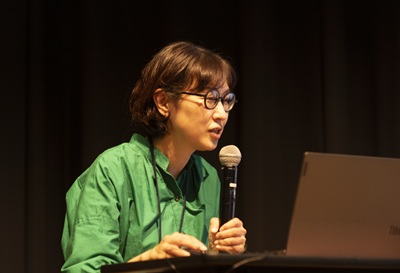
田坂博子(以下田坂):皆様、本日はご来場いただきまして誠にありがとうございます。これより総合会館30周年記念トークセッション「写真映像とこれからの30年」を始めたいと思います。本日は東京都現代美術館学芸員の岡村恵子さんをお招きし、「恵比寿映像祭と変わりゆく映像体験」と題しまして、お話を伺えればと思います。私は東京都写真美術館の田坂と申します。
岡村恵子(以下岡村):改めまして岡村です。平日の夜に、このような場に時間を割いていただきましてありがとうございます。1995年から学芸員を名乗っており、今回の30周年記念に合わせ、キャリアの半分ほどを過ごした写真美術館で手がけた仕事について振り返る機会をいただきました。
田坂:岡村さんは東京都現代美術館(MOT)時代、「アクション 行為がアートになるとき 1949-1979」という重要な展覧会を担当されていますね。
岡村:「アクション展」は、私がまだ20代の時に主担当として初めて手がけた展覧会です。企画自体はロサンゼルス現代美術館からの巡回で、当時はまだ若手でしたが、1億単位に及ぶ予算を任せられるような東京展でも使っていた、バブル期の最後の時期でした。大学で現代美術における身体性、特に1960年代末から70年代前半のボディ・アートやパフォーマンスの動向を専門としていたため、この展覧会は自ら手を挙げて、意欲的に臨みました。
田坂:その後、2000年の「MOTアニュアル2000 低温火傷」も当時非常に話題になった展覧会でした。
岡村:「MOTアニュアル」もまだ2回目で、若手にもやらせてみようという流れでした。当時既に開館して5年目だったと思いますが、1点も絵画が入っていない展覧会はこれが初めてでした。写真や映像、アクションの記録映像など、旧来の美術とは異なる作品を扱うことは、当初から関心を持つ分野だったので私にとってはごく自然な流れでした。
田坂:その後2007年に東京都写真美術館に配属され、在職した14年の間で多くの展覧会を担当されました。そしてその間、「恵比寿映像祭」を2009年の第1回から2021年の第13回まで担ってこられたということになります。 映像祭と企画展を同時に行うのは、現在のワークライフバランスから見ると—
岡村:はい、完全にアラートが鳴る働き方だったと思います。(笑)毎年映像祭が2月開催で、映像の企画展の枠がその直前だったため、大体同時進行でしたね。
映像祭創設の背景:予算ゼロとミッションの継承
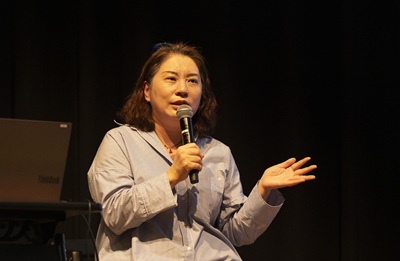
岡村:写真美術館に着任し、映像担当となった時にまず考えたのは、前任者が開館当初から携わってきた映像部門の仕事を引き継ぎつつ、手薄になっている部分や私にできることを、本来の部門の範疇の中でどう実現するかということでした。 映像祭創設の最大のきっかけは、「文化庁メディア芸術祭」が撤退したことです。「メディア芸術祭」は、メディアアートやマンガ、エンターテイメントを横断的に扱うフェスティバルです。この時期まで年に一度10日間、写真美術館の全館を使って開催されていました。
田坂:はい。
岡村:写真美術館としては、文化庁の主催で開催されていたメディア芸術祭の成長に貢献してきたという自負があったのですが、国立新美術館が開館し、国の施設ができたため、移転が決まってしまったのです。この移転により、会期枠の10日間が空いてしまい、そのための予算が館にはないなか、その穴埋めを迫られることになりました。
田坂:予算ゼロからのスタートだったのですね。
岡村:当時の管理職は、予算がないから良い共催パートナーを探し、先方の企画と資金で穴埋めをすればいいという心づもりだったと思います。しかし、異動してきたばかりの私は血気盛んだったため、「そんなことでいいのか?」と感じました。「どうせやるのだったら写真美術館独自の企画のために、その10日間を埋めてやろう!」という思いを抱きました。
運悪く私のような者がたまたま内に抱えていたアドレナリンを発揮して企画してしまったのがこの「恵比寿映像祭」だったというのが裏話なのです。
まず最初に、写真美術館の歴史を紐解き、創設当初のミッションを再定義しようと考えました。元々、地下のフロアは、年間を通じて映像を紹介する「映像工夫館」(イマジナリウム)として構想されていました。
田坂:イマジナリウムのアイデアは、実験工房のメンバーであったメディアアーティストの山口勝弘さんのコンセプトから取られていたのですよね。
岡村:山口さんは、映像がジャンルに枝分かれする以前の歴史を辿り、「あり得たはずの映像の未来を一緒に考えよう」という壮大な構想をこの施設のバックボーンに持たせていました。
私一人でこの壮大なミッションを引き受けるのは無理だと思った時、様々な人を巻き込み、招き入れ、「一緒にやっていけるような場」にしないとこの役割を果たせないと感じました。そのミッションを果たすエンジン的な役割を託せる形式として、短期間で集中的に開催する「祭り」という形、すなわち「映像祭」の着想に至ったのです。
キュレーション理念:「オルタナティヴ・ヴィジョンズ」
岡村:映像祭を構想するにあたり、「そこで扱う映像とは何か」という問いから始まりました。映像部門は、写真(静止画、2D)に対し、写真も含む映像文化全体を捉える視点を持っていたため、映画だけでも視覚文化全体でもなく、ひとことでは容易に訳しきれないものでした。
そこで採用したのが、英語タイトル「ART AND ALTERNATIVE VISIONS」です。アートであり、かつ、何か新たなビジョンを見せてくれるものという意訳をこの言葉に込めたのです。このタイトルは、「映像とは何かをめぐって、一つではない問いと答えを、作り手、担い手が共に探すプラットフォームに」という構想と同時に導き出されました。
田坂:大きな映像祭がスタートしたわけですね。
岡村:一回のフェスティバルで答えが出るものではないので、「回を重ねないと意味がないのですよ」と言い続け、存続していきたいという野望を浸透させていきました。
当時は、現代美術の領域で映像のプレゼンスが上がってきた時期と重なっていました。また、日本の文化領域で起こりがちな、各ジャンルのタコツボ化、つまり新しいものを取り込まないという状況をもったいないとも感じていました。
映像文化全体を受け皿と定め、異なるジャンルの人々が一堂に集まり、観客も巻き込むことで、射程を拡がり、関わる人々の母数が増え、支援が増えるのではないかという狙いもありました。
映像は時間と空間の中で再生され、「見て初めて存在するもの」、つまり「生きられるもの」です。必然的にライブの時間が伴うので、そこを大事にするフェスティバルにしようと考えました。これには携帯で映像を簡便に消費する時代への、美術館サイドからの抵抗という側面もありました。特別な場所で生きられる映像をみんなでシェアすることを大事にしよう、という考えです。
キュレーションの指針としては、「領域横断的・複合的であること」、「プログラムが相互に関与しあうこと」、そして、「全体を一つのテーマのもとでキュレーションする」という、美術畑のキュレーターとしての考えを貫きました。テーマは、数多ある作品のチョイスの中から、その年の作品を選ぶ「根拠(口実)」としても機能しました。
プレ企画「映像をめぐる7夜」での手弁当運営と予算獲得
田坂:映像祭が始まる前のプレ企画、「映像をめぐる7夜」(2008年)は、当時としては思い切った試みでしたよね。
岡村:今考えると本当に頭がおかしかったと思うのですが。その年から「メディア芸術祭」の撤退で空いた10日間を埋める必要があったのです。翌年に大きなフェスティバルを立ち上げるには、美術館の使い勝手や展示空間の特性を把握するための実験が必要だと考えました。そこで、日替わりのライブイベントを地下の展示室を使って7日間にわたり実施しました。
これは、現代美術館から異動してきたばかりだった私自身の自己紹介であり、「私は本気です」という態度の表明でもあったと思います。企画は全て自分で仕込み、運営は完全な手弁当でした。舞台監督がおらず、展示用の照明を巻き込まれてくれた館内スタッフが伝言でボタンを切り替えて場面転換していました。出演作家さんたちが、見かねて技術者を連れてきてくれたりもしました。
田坂:本当にオルタナティブな感じですね。
岡村:無料のイベントとした結果、集客は成功し、特に広告業界の重鎮をお招きしてCM映像を語って頂いた夜は、350人超のお客様で会場がいっぱいになりました。この成功が、本格的な映像祭実現へのひとつの説得材料となったと思います。
映像祭の予算書は、当初500万円程度の規模でしたが、当時の上司の意向もあり、2016年のオリンピック誘致事業のタイミングを利用して2億円規模の予算書に仕立て直しました。最終的に初回は約6,000万円の予算をつけていただき、映像祭が始まったのです。
とはいえ、正直、最初の頃は誰も何も期待していなかった。映像祭の存在すら知らないわけなので、適当にお茶を濁しても誰も怒らなかったと思いますが、そう油断して訪れた観客の首根っこを掴んででも「絶対逃がさないぞ!」と思っていました(笑)。だから、「本気の展示、完成度の高い展示にしなきゃいけないのだ」と作家に話をし、通常ならとても受けてはもらえないような仕事を受けてもらい、展示を実現させました。ジャネット・カーディフ(Janet Cardiff)やジョージ・ビュレス・ミラー(George Bures Miller)といった現代美術の一線級の作家が出てくれたことが、他の作家への呼び水にもなりました。また、映画監督のワン・ビン(王兵)の9時間の長編ドキュメンタリー『鉄西区』を上映するなど、映画界からも期待して頂けるような信頼関係も得られました。
継続のための運営ルールとキャパシティの拡大
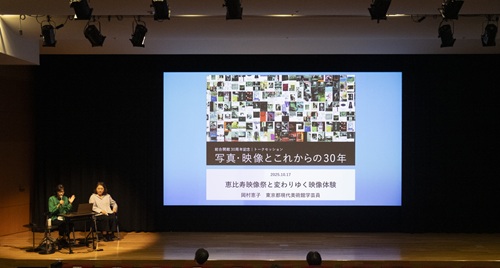
岡村:継続のために、運営上のルールを設けました。まず、展示は「入場無料」を堅持しました。無料にすることで、より多くの人に機会を共有してもらい、公共事業としての意義を高めるためです。ただし、人数に限りがある上映プログラムやライブイベントは有料とし、収入に充てました。
次に、「公募やコンペはしない」というルールです。公募をしないのはキュレーションに自負があったからです。また、コンペをしないのは、多様な価値基準の作品を集めるフェスティバルとして、一つの審査基準を無理やり定めることはフェスティバルの方向性に反すると思っていたからです。
そして、既得権益化の回避です。「同じ作家を安易に繰り返し登用しない」、という厳しいルールを設けたのは、特定の作家やセグメントに偏る「先生の島」あるいは声の大きい誰かの「シマ」のような状態になるのを避けるためです。常に間口を広げ、いろんな視点を入れるためでした。
田坂:そのルールのおかげで、批評家の人たちですら「名前を知らないアーティストばかり出ている」と驚くような、リサーチの面白さが際立っていました。
岡村:知名度ではなく、面白さを基準に選ぶべきと思っていました。恵比寿映像祭で紹介しているなら何か面白いかもしれないと思って、食わず嫌いをせずに、普段見ないものを一つでも見てくれる、そうした観客のうちの何%かでも映像祭によって人生が変わるといいなというような大志を抱いてはいました。
物理的なキャパシティを増やすため、第2回からはオフサイト展示を導入しました。隣接する恵比寿ガーデンプレイスにご協力頂き、人の出が少ない2月の屋外空間(公開空地)を借り上げて展示を行いました。これを今考えると無謀な試みでしたが、映像祭を何年か延命させたと思っています。
田坂:オフサイト展示では、ダムタイプメンバーの藤本隆行氏のオリジナル作品や、当時若手であったライゾマティックスの真鍋大度氏が本気の音響チームとして参加するなど、本格的なライブイベントが実現しました。
都築響一氏の「失われゆくメディア」をテーマにしたレーザーディスクカラオケのスナックの展示や、東日本大震災の翌年(第4回 恵比寿映像祭「映像のフィジカル」)では、建築家鈴木了二氏の巨大な建築模型の展示、そして建築学科出身の大木裕之氏が展示空間に住み続けるというパフォーマンス性の高い企画もありました。
岡村:観客が交差して混ざり合い、そこで違う議論が生まれることを大事にしたかったのです。ジャンルを思い切って超えていくことが、映像の善し悪しを簡単に決めないための手立てでした。
映像の変容と未来の美術館の役割
田坂:岡村さんがディレクターとして関わった最終回(第13回)は、コロナ禍の最も大変な時期でした。
岡村:第13回「映像の気持ち」の時はキャンセルが相次ぎ、準備していたオフサイト展示もできなくなり、図録(パンフレット)が出せなかったのは未だに残念に思います。一方で、距離を取らなければならなかったため作品数を絞った結果、むしろ空間構成が良く「見やすい」と評判でした。
この十数年で映像をめぐる状況は随分変わりました。今はもうデジタルネイティブの方たちが作家として現場に立たれる時代です。一般に流通する機材の質が上がり、インターネット上での映像の使い方も開かれてきました。
旧来のメディアである美術館が、映像の最も面白い部分を見せることに追いついていけない可能性もあります。では、美術館は映像をどう扱っていくのか。必要なのは第9回のテーマにも掲げた「トランスポジション」(場所を変える、位置取りを変える、見方を変える)です。
美術館は、外で起きている面白いことへの感度を高くもちつつ、自分たちが持っているリソース、すなわち継承してきたコレクション、経験値、そして作られてきたコミュニティを土台にして、これから何をすべきかを考えることが必要な時期に入っているのだと思います。
結局、人が見ているという点においては、100年前も今も映像のあり方は、あまり変わっていません。そのライブな時間や、それを共有する体験のオリジナリティは、やはり物理的な箱(美術館)があることによって提供できる価値なのではないでしょうか。その価値を大事に伝えていくことが、今後の美術館の役割であると考えています。
TOP 30th Anniversary Talk Session
Yebisu International Festival for Art & Alternative Visions: Photography and Moving Images, and the 30 Years to Come
–A challenge with no budget, the curatorial journey and future prospects–
Date:
October 9, 2025, 14:00-16:00
Speakers:
Okamura Keiko(Curator of Museum of Contemporary Art Tokyo)
Tasaka Hiroko (Curator of Tokyo Photographic Art Museum, Moderator)
Introduction: 30th anniversary of the Tokyo Photographic Art Museum and the beginning of Yebizo
Tasaka Hiroko (TH): Thank you for joining us today. We will now begin the talk session “Photography and Moving Images, and the 30 Years to Come,” commemorating the 30th anniversary of the Tokyo Photographic Art Museum (TOP). We welcome here Okamura Keiko, curator of the Tokyo Photographic Art Museum, to talk about the Yebisu International Festival for Art & Alternative Visions (Yebizo) and the evolving moving image experience. My name is Tasaka from the Tokyo Photographic Art Museum.
Okamura Keiko (OK): Nice to meet you, my name is Okamura. Thank you very much for your time on a weekday night for an event like this one. I became a curator in 1995, and I have been given this opportunity to look back on what I have achieved at TOP where I have spent about half of my career, for the occasion of its 30th anniversary.
TH: You have curated an important exhibition during your time at the Museum of Contemporary Art Tokyo (MOT) called “Out of Actions Between Performance and the Object 1949-1979.”
OK: Still in my twenties, it was the first exhibition I had worked on as the main curator. The concept itself was a touring exhibition from the Museum of Contemporary Art, Los Angeles. Although I was still young, I was given a budget of over 100 million JPY for the Tokyo exhibition that took place toward the end of the economic bubble. As I specialized in the physicality within contemporary art, specifically the movements of body art and performance from the end 1960s to the early 70s in university, I volunteered and worked on this exhibition with thrill.
TH: The exhibition “MOT ANNUAL 2000 Land/mind/body-scapes in the Age of Cold Burn” in 2000 was another show that garnered attention at the time.
OK: MOT ANNUAL was still in its second edition, and it was considered a program for the younger curators to challenge themselves. About 5 years after the opening of the museum, it was the first show with no paintings. It seemed natural to me as handling works outside conventional art—like photography, moving images, or film documentation of action—was my field of interest from the beginning.
TH: After being relocated to the Tokyo Photographic Art Museum in 2007, you curated numerous exhibitions during the 14 years you worked at the museum. It means that you also organized the Yebisu International Festival for Art & Alternative Visions from its first edition in 2009 to its 13th edition in 2021. Simultaneously tending to both the festival and the exhibitions, I can imagine that your work-life balance was lopsided.
OK: Indeed, it was definitely a way of working that would ring the alarm in my body. Every year, the festival was in February, and the exhibition period assigned to moving images was right before which meant I had to work on both shows side by side.
The background to the establishment of Yebizo: No budget and the succession of a mission
OK: When I joined TOP and was assigned to the moving image department, the first thing on my mind was to succeed the work of my predecessor, who was involved in this section since the opening of the museum, and to figure out a way to carry out the missions that have been overlooked and accomplish whatever I can achieve in the meantime, within the scope of this department. The most substantial trigger for the launch of the festival was the withdrawal of the Japan Media Arts Festival. This festival cross-sectionally showcased media art, manga, or entertainment production. Until this withdrawal, it took place once a year over 10 days, using the entire TOP venue.
TH: I see.
OK: Although TOP took pride in its contribution to the growth of this media festival organized by the Agency of Cultural Affairs, the opening of the National Art Center, Tokyo, as a national institution made the relocation of the festival definite. Due to this change of event, the 10 days allocated for the festival were vacated. The museum had to make up for this blank with no budget.
TH: It seems like a beginning with no money.
OK: The management most likely envisaged finding a decent partnership because there was no money, and using the partners’ program and budget to substitute for the withdrawal. Just after my transfer to TOP, I was very high-spirited and thought: Is that really the right thing to do? If we need to do it anyway, why not fill up these 10 days with a program original to the museum!
So the backstory of this Yebisu International Festival of Art & Alternative Visions is someone like me, unfortunately, exerting the innate adrenaline to kick off the program.
Before anything, I decided to break down the history of the museum and to redefine the mission set up at the time of its opening. The basement floor was originally planned as an “Imaginarium” showcasing moving images throughout the year.
TH: The idea of this imaginarium came from the concept of the media artist, Yamaguchi Katsuhiro, a member of Jikken Kōbō, right?
OK: Mr. Yamaguchi introduced a backbone to this establishment, a tremendous concept of “together, let’s think about the future of moving image that might have happened,” as he retraced the history back to when moving image was not subdivided as a genre.
When I realized that I couldn't take on this ambitious mission alone, I had to involve a variety of people, invite them, and create a space where they would feel like they could work together, in order to fulfill this role. As a format to which I could entrust the role of an engine to achieve this mission, I came up with the idea of a “moving image festival”—a short-term and concentrated gala.
Curatorial Philosophy: Alternative Visions
OK: When developing the concept of this festival, it began with the question “What kind of moving image will be shown?” Compared to photographs (still images, 2D), this department encompassed a comprehensive perspective on the overall culture of moving images that included photography. It was not just film nor the entire visual culture, and it was difficult to simply translate into a single word.
We thus selected the English title “ART AND ALTERNATIVE VISIONS.” We aimed to convey that it is art, while also something that can provide a new vision. This title was developed together with the concept: “moving image is a platform where the maker and the bearer explore together, not one question and answer, but many.”
TH: That is how this large festival started.
OK: A single edition could not spell out an answer; I kept voicing that we have to keep it going for it to make sense, seeping my ambition for the festival to last.
Back then, the presence of moving images were increasingly highlighted in the field of contemporary art. Yet each art genre seemed to have turned into an echo chamber, something often seen in Japanese cultural fields. I had also felt that such situations that cannot accept the new were an opportunity wasted. By considering the entire moving image culture as a platform, gathering people of various genres into one place, and drawing the audience in, we were also aiming for a wider target, increasing the number of people involved, which might then lead to increasing support.
A moving image is played in a frame of time and space. “It can only exist once seen,” thus “it only lives once seen.” Naturally, it is a medium that requires a live timeframe, and we wanted to cherish that aspect. Besides, it was a resistance by the museum against the era in which moving images are easily consumed on phones. In other words, we believed in attributing value to sharing moving images that live in a special place with everyone.
As curational principles, I adhered to my belief as a curator from the field of contemporary art: “to be cross-sectional and interdisciplinary,” “for the programs to interact with each other,” and “to curate the whole under one theme.” The theme acted as the “ground (pretext)” for the selection in the specific edition, chosen from heaps of possible artworks.
The self-managed pre-event “Seven Nights, Seven Lights” and acquiring the budget
TH: The pre-event “Seven Nights, Seven Lights” (2008), which opened before the festival, was quite a bold move at the time.
OK: It was insane now that I think about it. All because we had to fill up the 10 days left vacant by the relocation of the Japan Media Arts Festival from that year. To be able to establish a large festival in the following year, we needed an experiment to understand how to use the venue and the characteristics of the gallery space. We organized a seven-day live event solely in the underground gallery with daily programs.
I think of it as a form of an introduction for myself, having just moved from MOT, and demonstrating that I was dead serious. I produced all the programs and we managed with what we had in hand. We had no stage director, and the museum staff who volunteered helped making exhibition lighting adjustments for the scene changes based on brief communication. Probably unable to just stand by and watch, some of the performing artists brought some technicians with them.
TH: It really seems alternative.
OK: Because it was a free event, we drew in a great number of visitors. The night when we invited a prominent figure in the advertising industry to talk about commercial videos, over 350 people filled up the venue. I think this success served as one convincing evidence to materialize a full-scale festival for art and alternative visions.
The initial budget proposal was 5 million JPY, but with my superior’s wish, it was revised to a 200 million JPY scale project that can contribute to the bidding for the Olympics. In the end, we received about 60 million JPY to initiate the festival.
Honestly, I don’t think many people had any expectations in the beginning. The existence of the festival was still under the radar, no one would be disappointed even if it was just makeshift.
But I was thinking “I am not letting you go!” and was about to grab the casually visiting audience by the scruff of their neck if I had to. I realized the exhibition with artists who would usually never take on an offer like this one by speaking to each of them: “We need a serious, high-quality exhibition.” People like Janet Cardiff or George Bures Miller, at the front line of contemporary art, joining us acted as the catalyst for other artists to participate. Screening the long 9-hour documentary "Tie Xi Qu: West of the Tracks" by film director Wang Bing further earned the trust within the film industry for them to look forward to our future projects.
The rule of the management and the expansion of its capacity
OK: We established some operational rules to ensure the event’s continuity. First, we stuck with "free entry" for the exhibitions. We could thus share this opportunity with a wider audience and enhance its value as a public work. Still, screening programs and live events with an audience capacity were paid events and became our source of income.
The next rule was “no open call.” The reasons behind this rule are that we believed in our curatorial ability, and setting a forced judging criterion seemed to go against the festival’s objective, which aimed to bring together works with values of various standards.
The final rule was to steer clear of vested interests. By strictly “not exhibiting the same artists without careful consideration,” we were trying to avoid creating “an island of Masters” or a “territory” of someone specially vocal, biased towards a certain artist or segment. In such a way, the opportunity was always wide open to let in different perspectives.
TH: Thanks to this rule, the research conducted was self-evidently interesting; so much so that even the critics were surprised to see a lot of artists they had never heard of.
OK: We believed we needed to select not based on recognition but on how interesting they are. We wished for the audience to see even one show they wouldn’t usually see or even try, but to visit anyway, guessing it might be interesting if it’s shown at Yebizo. We had harbored the grand ambition that a small percentage of those viewers could have their lives changed by the festival.
To increase physical capacity, we introduced an off-site exhibition from the second edition. With the support of the neighboring Yebisu Garden Place, we were able to use the outdoor space (public vacant area) to build an exhibition in February, a time of year with fewer visitors. Reflecting back today, this was indeed a reckless endeavor, but it seemed to have prolonged the life of the festival by a few years.
TH: In this off-site exhibition, a real live event was organized showcasing original works by Fujimoto Takayuki of Dumb Type, while Manabe Daito of the yet emerging Rhizomatiks joined with a full-on sound team.
There were also highly performative projects such as Tsuzuki Kyōichi’s exhibition featuring a snack bar with a laser disc karaoke themed around “Vanishing Media”, or architect Suzuki Ryōji's massive architectural model and Ōki Hiroyuki, an architecture graduate, living continuously within the exhibition space which both took place in the year following the Great East Japan Earthquake (4th Yebisu International for Art and Alternative Visions “How Physical”).
OK: We wanted to value how the audience would crossover and network, bearing fruit in different discussions. Boldly stepping out of genres was the means to avoid lightly defining the good and bad of moving images.
The transformation of moving images and the future role of the museum
TH: The last edition you worked on as the director (13th edition) was the most difficult period of time due to the pandemic.
OK: For the 13th edition “E-Motion Graphics,” I am still disappointed by the many participation withdrawals, having to give up the off-site exhibition we had prepared and being unable to publish the catalog (pamphlet). On the other hand, the spatial design realized with fewer works to maintain adequate physical distance received positive feedback as it provided a better viewing experience.
The situation surrounding moving images has changed considerably in the past decade. We have reached the age where digital natives have become practicing artists. Devices of higher quality are now available to the public, and the use of moving images on the internet has become more open.
There is a possibility that the museum, as a traditional medium, cannot catch up to a viewing experience that showcases the most interesting facets of moving images. If so, how will the museum further show moving images? What is required is “transposition”—changing the location, position, point of view—a theme also presented in the 9th edition.
Museums are now facing an age where they must think about what to do next based on their resources—that is, the collection, experience, and communities inherited—all the while being astute to whatever is happening outside.
Ultimately, the nature of moving images and the fact that people are still viewing them has not changed much from 100 years ago. The live events, or the originality of sharing such experiences—isn't that a value we can provide because we have a physical showroom, a museum? I believe the role of future museums is to keep communicating this value.
「恵比寿映像祭と変わりゆく映像体験」
— 予算ゼロからの挑戦、キュレーションの軌跡と未来の展望 —
日 時:
2025年10月17日(金)18:00-19:30
登壇者:
岡村 恵子(東京都現代美術館学芸員)
田坂 博子(東京都写真美術館 学芸員、モデレーター)
導入:東京都写真美術館30周年と映像祭の始まり
田坂博子(以下田坂):皆様、本日はご来場いただきまして誠にありがとうございます。これより総合会館30周年記念トークセッション「写真映像とこれからの30年」を始めたいと思います。本日は東京都現代美術館学芸員の岡村恵子さんをお招きし、「恵比寿映像祭と変わりゆく映像体験」と題しまして、お話を伺えればと思います。私は東京都写真美術館の田坂と申します。
岡村恵子(以下岡村):改めまして岡村です。平日の夜に、このような場に時間を割いていただきましてありがとうございます。1995年から学芸員を名乗っており、今回の30周年記念に合わせ、キャリアの半分ほどを過ごした写真美術館で手がけた仕事について振り返る機会をいただきました。
田坂:岡村さんは東京都現代美術館(MOT)時代、「アクション 行為がアートになるとき 1949-1979」という重要な展覧会を担当されていますね。
岡村:「アクション展」は、私がまだ20代の時に主担当として初めて手がけた展覧会です。企画自体はロサンゼルス現代美術館からの巡回で、当時はまだ若手でしたが、1億単位に及ぶ予算を任せられるような東京展でも使っていた、バブル期の最後の時期でした。大学で現代美術における身体性、特に1960年代末から70年代前半のボディ・アートやパフォーマンスの動向を専門としていたため、この展覧会は自ら手を挙げて、意欲的に臨みました。
田坂:その後、2000年の「MOTアニュアル2000 低温火傷」も当時非常に話題になった展覧会でした。
岡村:「MOTアニュアル」もまだ2回目で、若手にもやらせてみようという流れでした。当時既に開館して5年目だったと思いますが、1点も絵画が入っていない展覧会はこれが初めてでした。写真や映像、アクションの記録映像など、旧来の美術とは異なる作品を扱うことは、当初から関心を持つ分野だったので私にとってはごく自然な流れでした。
田坂:その後2007年に東京都写真美術館に配属され、在職した14年の間で多くの展覧会を担当されました。そしてその間、「恵比寿映像祭」を2009年の第1回から2021年の第13回まで担ってこられたということになります。 映像祭と企画展を同時に行うのは、現在のワークライフバランスから見ると—
岡村:はい、完全にアラートが鳴る働き方だったと思います。(笑)毎年映像祭が2月開催で、映像の企画展の枠がその直前だったため、大体同時進行でしたね。
映像祭創設の背景:予算ゼロとミッションの継承
岡村:写真美術館に着任し、映像担当となった時にまず考えたのは、前任者が開館当初から携わってきた映像部門の仕事を引き継ぎつつ、手薄になっている部分や私にできることを、本来の部門の範疇の中でどう実現するかということでした。 映像祭創設の最大のきっかけは、「文化庁メディア芸術祭」が撤退したことです。「メディア芸術祭」は、メディアアートやマンガ、エンターテイメントを横断的に扱うフェスティバルです。この時期まで年に一度10日間、写真美術館の全館を使って開催されていました。
田坂:はい。
岡村:写真美術館としては、文化庁の主催で開催されていたメディア芸術祭の成長に貢献してきたという自負があったのですが、国立新美術館が開館し、国の施設ができたため、移転が決まってしまったのです。この移転により、会期枠の10日間が空いてしまい、そのための予算が館にはないなか、その穴埋めを迫られることになりました。
田坂:予算ゼロからのスタートだったのですね。
岡村:当時の管理職は、予算がないから良い共催パートナーを探し、先方の企画と資金で穴埋めをすればいいという心づもりだったと思います。しかし、異動してきたばかりの私は血気盛んだったため、「そんなことでいいのか?」と感じました。「どうせやるのだったら写真美術館独自の企画のために、その10日間を埋めてやろう!」という思いを抱きました。
運悪く私のような者がたまたま内に抱えていたアドレナリンを発揮して企画してしまったのがこの「恵比寿映像祭」だったというのが裏話なのです。
まず最初に、写真美術館の歴史を紐解き、創設当初のミッションを再定義しようと考えました。元々、地下のフロアは、年間を通じて映像を紹介する「映像工夫館」(イマジナリウム)として構想されていました。
田坂:イマジナリウムのアイデアは、実験工房のメンバーであったメディアアーティストの山口勝弘さんのコンセプトから取られていたのですよね。
岡村:山口さんは、映像がジャンルに枝分かれする以前の歴史を辿り、「あり得たはずの映像の未来を一緒に考えよう」という壮大な構想をこの施設のバックボーンに持たせていました。
私一人でこの壮大なミッションを引き受けるのは無理だと思った時、様々な人を巻き込み、招き入れ、「一緒にやっていけるような場」にしないとこの役割を果たせないと感じました。そのミッションを果たすエンジン的な役割を託せる形式として、短期間で集中的に開催する「祭り」という形、すなわち「映像祭」の着想に至ったのです。
キュレーション理念:「オルタナティヴ・ヴィジョンズ」
岡村:映像祭を構想するにあたり、「そこで扱う映像とは何か」という問いから始まりました。映像部門は、写真(静止画、2D)に対し、写真も含む映像文化全体を捉える視点を持っていたため、映画だけでも視覚文化全体でもなく、ひとことでは容易に訳しきれないものでした。
そこで採用したのが、英語タイトル「ART AND ALTERNATIVE VISIONS」です。アートであり、かつ、何か新たなビジョンを見せてくれるものという意訳をこの言葉に込めたのです。このタイトルは、「映像とは何かをめぐって、一つではない問いと答えを、作り手、担い手が共に探すプラットフォームに」という構想と同時に導き出されました。
田坂:大きな映像祭がスタートしたわけですね。
岡村:一回のフェスティバルで答えが出るものではないので、「回を重ねないと意味がないのですよ」と言い続け、存続していきたいという野望を浸透させていきました。
当時は、現代美術の領域で映像のプレゼンスが上がってきた時期と重なっていました。また、日本の文化領域で起こりがちな、各ジャンルのタコツボ化、つまり新しいものを取り込まないという状況をもったいないとも感じていました。
映像文化全体を受け皿と定め、異なるジャンルの人々が一堂に集まり、観客も巻き込むことで、射程を拡がり、関わる人々の母数が増え、支援が増えるのではないかという狙いもありました。
映像は時間と空間の中で再生され、「見て初めて存在するもの」、つまり「生きられるもの」です。必然的にライブの時間が伴うので、そこを大事にするフェスティバルにしようと考えました。これには携帯で映像を簡便に消費する時代への、美術館サイドからの抵抗という側面もありました。特別な場所で生きられる映像をみんなでシェアすることを大事にしよう、という考えです。
キュレーションの指針としては、「領域横断的・複合的であること」、「プログラムが相互に関与しあうこと」、そして、「全体を一つのテーマのもとでキュレーションする」という、美術畑のキュレーターとしての考えを貫きました。テーマは、数多ある作品のチョイスの中から、その年の作品を選ぶ「根拠(口実)」としても機能しました。
プレ企画「映像をめぐる7夜」での手弁当運営と予算獲得
田坂:映像祭が始まる前のプレ企画、「映像をめぐる7夜」(2008年)は、当時としては思い切った試みでしたよね。
岡村:今考えると本当に頭がおかしかったと思うのですが。その年から「メディア芸術祭」の撤退で空いた10日間を埋める必要があったのです。翌年に大きなフェスティバルを立ち上げるには、美術館の使い勝手や展示空間の特性を把握するための実験が必要だと考えました。そこで、日替わりのライブイベントを地下の展示室を使って7日間にわたり実施しました。
これは、現代美術館から異動してきたばかりだった私自身の自己紹介であり、「私は本気です」という態度の表明でもあったと思います。企画は全て自分で仕込み、運営は完全な手弁当でした。舞台監督がおらず、展示用の照明を巻き込まれてくれた館内スタッフが伝言でボタンを切り替えて場面転換していました。出演作家さんたちが、見かねて技術者を連れてきてくれたりもしました。
田坂:本当にオルタナティブな感じですね。
岡村:無料のイベントとした結果、集客は成功し、特に広告業界の重鎮をお招きしてCM映像を語って頂いた夜は、350人超のお客様で会場がいっぱいになりました。この成功が、本格的な映像祭実現へのひとつの説得材料となったと思います。
映像祭の予算書は、当初500万円程度の規模でしたが、当時の上司の意向もあり、2016年のオリンピック誘致事業のタイミングを利用して2億円規模の予算書に仕立て直しました。最終的に初回は約6,000万円の予算をつけていただき、映像祭が始まったのです。
とはいえ、正直、最初の頃は誰も何も期待していなかった。映像祭の存在すら知らないわけなので、適当にお茶を濁しても誰も怒らなかったと思いますが、そう油断して訪れた観客の首根っこを掴んででも「絶対逃がさないぞ!」と思っていました(笑)。だから、「本気の展示、完成度の高い展示にしなきゃいけないのだ」と作家に話をし、通常ならとても受けてはもらえないような仕事を受けてもらい、展示を実現させました。ジャネット・カーディフ(Janet Cardiff)やジョージ・ビュレス・ミラー(George Bures Miller)といった現代美術の一線級の作家が出てくれたことが、他の作家への呼び水にもなりました。また、映画監督のワン・ビン(王兵)の9時間の長編ドキュメンタリー『鉄西区』を上映するなど、映画界からも期待して頂けるような信頼関係も得られました。
継続のための運営ルールとキャパシティの拡大
岡村:継続のために、運営上のルールを設けました。まず、展示は「入場無料」を堅持しました。無料にすることで、より多くの人に機会を共有してもらい、公共事業としての意義を高めるためです。ただし、人数に限りがある上映プログラムやライブイベントは有料とし、収入に充てました。
次に、「公募やコンペはしない」というルールです。公募をしないのはキュレーションに自負があったからです。また、コンペをしないのは、多様な価値基準の作品を集めるフェスティバルとして、一つの審査基準を無理やり定めることはフェスティバルの方向性に反すると思っていたからです。
そして、既得権益化の回避です。「同じ作家を安易に繰り返し登用しない」、という厳しいルールを設けたのは、特定の作家やセグメントに偏る「先生の島」あるいは声の大きい誰かの「シマ」のような状態になるのを避けるためです。常に間口を広げ、いろんな視点を入れるためでした。
田坂:そのルールのおかげで、批評家の人たちですら「名前を知らないアーティストばかり出ている」と驚くような、リサーチの面白さが際立っていました。
岡村:知名度ではなく、面白さを基準に選ぶべきと思っていました。恵比寿映像祭で紹介しているなら何か面白いかもしれないと思って、食わず嫌いをせずに、普段見ないものを一つでも見てくれる、そうした観客のうちの何%かでも映像祭によって人生が変わるといいなというような大志を抱いてはいました。
物理的なキャパシティを増やすため、第2回からはオフサイト展示を導入しました。隣接する恵比寿ガーデンプレイスにご協力頂き、人の出が少ない2月の屋外空間(公開空地)を借り上げて展示を行いました。これを今考えると無謀な試みでしたが、映像祭を何年か延命させたと思っています。
田坂:オフサイト展示では、ダムタイプメンバーの藤本隆行氏のオリジナル作品や、当時若手であったライゾマティックスの真鍋大度氏が本気の音響チームとして参加するなど、本格的なライブイベントが実現しました。
都築響一氏の「失われゆくメディア」をテーマにしたレーザーディスクカラオケのスナックの展示や、東日本大震災の翌年(第4回 恵比寿映像祭「映像のフィジカル」)では、建築家鈴木了二氏の巨大な建築模型の展示、そして建築学科出身の大木裕之氏が展示空間に住み続けるというパフォーマンス性の高い企画もありました。
岡村:観客が交差して混ざり合い、そこで違う議論が生まれることを大事にしたかったのです。ジャンルを思い切って超えていくことが、映像の善し悪しを簡単に決めないための手立てでした。
映像の変容と未来の美術館の役割
田坂:岡村さんがディレクターとして関わった最終回(第13回)は、コロナ禍の最も大変な時期でした。
岡村:第13回「映像の気持ち」の時はキャンセルが相次ぎ、準備していたオフサイト展示もできなくなり、図録(パンフレット)が出せなかったのは未だに残念に思います。一方で、距離を取らなければならなかったため作品数を絞った結果、むしろ空間構成が良く「見やすい」と評判でした。
この十数年で映像をめぐる状況は随分変わりました。今はもうデジタルネイティブの方たちが作家として現場に立たれる時代です。一般に流通する機材の質が上がり、インターネット上での映像の使い方も開かれてきました。
旧来のメディアである美術館が、映像の最も面白い部分を見せることに追いついていけない可能性もあります。では、美術館は映像をどう扱っていくのか。必要なのは第9回のテーマにも掲げた「トランスポジション」(場所を変える、位置取りを変える、見方を変える)です。
美術館は、外で起きている面白いことへの感度を高くもちつつ、自分たちが持っているリソース、すなわち継承してきたコレクション、経験値、そして作られてきたコミュニティを土台にして、これから何をすべきかを考えることが必要な時期に入っているのだと思います。
結局、人が見ているという点においては、100年前も今も映像のあり方は、あまり変わっていません。そのライブな時間や、それを共有する体験のオリジナリティは、やはり物理的な箱(美術館)があることによって提供できる価値なのではないでしょうか。その価値を大事に伝えていくことが、今後の美術館の役割であると考えています。
TOP 30th Anniversary Talk Session
Yebisu International Festival for Art & Alternative Visions: Photography and Moving Images, and the 30 Years to Come
–A challenge with no budget, the curatorial journey and future prospects–
Date:
October 9, 2025, 14:00-16:00
Speakers:
Okamura Keiko(Curator of Museum of Contemporary Art Tokyo)
Tasaka Hiroko (Curator of Tokyo Photographic Art Museum, Moderator)
Introduction: 30th anniversary of the Tokyo Photographic Art Museum and the beginning of Yebizo
Tasaka Hiroko (TH): Thank you for joining us today. We will now begin the talk session “Photography and Moving Images, and the 30 Years to Come,” commemorating the 30th anniversary of the Tokyo Photographic Art Museum (TOP). We welcome here Okamura Keiko, curator of the Tokyo Photographic Art Museum, to talk about the Yebisu International Festival for Art & Alternative Visions (Yebizo) and the evolving moving image experience. My name is Tasaka from the Tokyo Photographic Art Museum.
Okamura Keiko (OK): Nice to meet you, my name is Okamura. Thank you very much for your time on a weekday night for an event like this one. I became a curator in 1995, and I have been given this opportunity to look back on what I have achieved at TOP where I have spent about half of my career, for the occasion of its 30th anniversary.
TH: You have curated an important exhibition during your time at the Museum of Contemporary Art Tokyo (MOT) called “Out of Actions Between Performance and the Object 1949-1979.”
OK: Still in my twenties, it was the first exhibition I had worked on as the main curator. The concept itself was a touring exhibition from the Museum of Contemporary Art, Los Angeles. Although I was still young, I was given a budget of over 100 million JPY for the Tokyo exhibition that took place toward the end of the economic bubble. As I specialized in the physicality within contemporary art, specifically the movements of body art and performance from the end 1960s to the early 70s in university, I volunteered and worked on this exhibition with thrill.
TH: The exhibition “MOT ANNUAL 2000 Land/mind/body-scapes in the Age of Cold Burn” in 2000 was another show that garnered attention at the time.
OK: MOT ANNUAL was still in its second edition, and it was considered a program for the younger curators to challenge themselves. About 5 years after the opening of the museum, it was the first show with no paintings. It seemed natural to me as handling works outside conventional art—like photography, moving images, or film documentation of action—was my field of interest from the beginning.
TH: After being relocated to the Tokyo Photographic Art Museum in 2007, you curated numerous exhibitions during the 14 years you worked at the museum. It means that you also organized the Yebisu International Festival for Art & Alternative Visions from its first edition in 2009 to its 13th edition in 2021. Simultaneously tending to both the festival and the exhibitions, I can imagine that your work-life balance was lopsided.
OK: Indeed, it was definitely a way of working that would ring the alarm in my body. Every year, the festival was in February, and the exhibition period assigned to moving images was right before which meant I had to work on both shows side by side.
The background to the establishment of Yebizo: No budget and the succession of a mission
OK: When I joined TOP and was assigned to the moving image department, the first thing on my mind was to succeed the work of my predecessor, who was involved in this section since the opening of the museum, and to figure out a way to carry out the missions that have been overlooked and accomplish whatever I can achieve in the meantime, within the scope of this department. The most substantial trigger for the launch of the festival was the withdrawal of the Japan Media Arts Festival. This festival cross-sectionally showcased media art, manga, or entertainment production. Until this withdrawal, it took place once a year over 10 days, using the entire TOP venue.
TH: I see.
OK: Although TOP took pride in its contribution to the growth of this media festival organized by the Agency of Cultural Affairs, the opening of the National Art Center, Tokyo, as a national institution made the relocation of the festival definite. Due to this change of event, the 10 days allocated for the festival were vacated. The museum had to make up for this blank with no budget.
TH: It seems like a beginning with no money.
OK: The management most likely envisaged finding a decent partnership because there was no money, and using the partners’ program and budget to substitute for the withdrawal. Just after my transfer to TOP, I was very high-spirited and thought: Is that really the right thing to do? If we need to do it anyway, why not fill up these 10 days with a program original to the museum!
So the backstory of this Yebisu International Festival of Art & Alternative Visions is someone like me, unfortunately, exerting the innate adrenaline to kick off the program.
Before anything, I decided to break down the history of the museum and to redefine the mission set up at the time of its opening. The basement floor was originally planned as an “Imaginarium” showcasing moving images throughout the year.
TH: The idea of this imaginarium came from the concept of the media artist, Yamaguchi Katsuhiro, a member of Jikken Kōbō, right?
OK: Mr. Yamaguchi introduced a backbone to this establishment, a tremendous concept of “together, let’s think about the future of moving image that might have happened,” as he retraced the history back to when moving image was not subdivided as a genre.
When I realized that I couldn't take on this ambitious mission alone, I had to involve a variety of people, invite them, and create a space where they would feel like they could work together, in order to fulfill this role. As a format to which I could entrust the role of an engine to achieve this mission, I came up with the idea of a “moving image festival”—a short-term and concentrated gala.
Curatorial Philosophy: Alternative Visions
OK: When developing the concept of this festival, it began with the question “What kind of moving image will be shown?” Compared to photographs (still images, 2D), this department encompassed a comprehensive perspective on the overall culture of moving images that included photography. It was not just film nor the entire visual culture, and it was difficult to simply translate into a single word.
We thus selected the English title “ART AND ALTERNATIVE VISIONS.” We aimed to convey that it is art, while also something that can provide a new vision. This title was developed together with the concept: “moving image is a platform where the maker and the bearer explore together, not one question and answer, but many.”
TH: That is how this large festival started.
OK: A single edition could not spell out an answer; I kept voicing that we have to keep it going for it to make sense, seeping my ambition for the festival to last.
Back then, the presence of moving images were increasingly highlighted in the field of contemporary art. Yet each art genre seemed to have turned into an echo chamber, something often seen in Japanese cultural fields. I had also felt that such situations that cannot accept the new were an opportunity wasted. By considering the entire moving image culture as a platform, gathering people of various genres into one place, and drawing the audience in, we were also aiming for a wider target, increasing the number of people involved, which might then lead to increasing support.
A moving image is played in a frame of time and space. “It can only exist once seen,” thus “it only lives once seen.” Naturally, it is a medium that requires a live timeframe, and we wanted to cherish that aspect. Besides, it was a resistance by the museum against the era in which moving images are easily consumed on phones. In other words, we believed in attributing value to sharing moving images that live in a special place with everyone.
As curational principles, I adhered to my belief as a curator from the field of contemporary art: “to be cross-sectional and interdisciplinary,” “for the programs to interact with each other,” and “to curate the whole under one theme.” The theme acted as the “ground (pretext)” for the selection in the specific edition, chosen from heaps of possible artworks.
The self-managed pre-event “Seven Nights, Seven Lights” and acquiring the budget
TH: The pre-event “Seven Nights, Seven Lights” (2008), which opened before the festival, was quite a bold move at the time.
OK: It was insane now that I think about it. All because we had to fill up the 10 days left vacant by the relocation of the Japan Media Arts Festival from that year. To be able to establish a large festival in the following year, we needed an experiment to understand how to use the venue and the characteristics of the gallery space. We organized a seven-day live event solely in the underground gallery with daily programs.
I think of it as a form of an introduction for myself, having just moved from MOT, and demonstrating that I was dead serious. I produced all the programs and we managed with what we had in hand. We had no stage director, and the museum staff who volunteered helped making exhibition lighting adjustments for the scene changes based on brief communication. Probably unable to just stand by and watch, some of the performing artists brought some technicians with them.
TH: It really seems alternative.
OK: Because it was a free event, we drew in a great number of visitors. The night when we invited a prominent figure in the advertising industry to talk about commercial videos, over 350 people filled up the venue. I think this success served as one convincing evidence to materialize a full-scale festival for art and alternative visions.
The initial budget proposal was 5 million JPY, but with my superior’s wish, it was revised to a 200 million JPY scale project that can contribute to the bidding for the Olympics. In the end, we received about 60 million JPY to initiate the festival.
Honestly, I don’t think many people had any expectations in the beginning. The existence of the festival was still under the radar, no one would be disappointed even if it was just makeshift.
But I was thinking “I am not letting you go!” and was about to grab the casually visiting audience by the scruff of their neck if I had to. I realized the exhibition with artists who would usually never take on an offer like this one by speaking to each of them: “We need a serious, high-quality exhibition.” People like Janet Cardiff or George Bures Miller, at the front line of contemporary art, joining us acted as the catalyst for other artists to participate. Screening the long 9-hour documentary "Tie Xi Qu: West of the Tracks" by film director Wang Bing further earned the trust within the film industry for them to look forward to our future projects.
The rule of the management and the expansion of its capacity
OK: We established some operational rules to ensure the event’s continuity. First, we stuck with "free entry" for the exhibitions. We could thus share this opportunity with a wider audience and enhance its value as a public work. Still, screening programs and live events with an audience capacity were paid events and became our source of income.
The next rule was “no open call.” The reasons behind this rule are that we believed in our curatorial ability, and setting a forced judging criterion seemed to go against the festival’s objective, which aimed to bring together works with values of various standards.
The final rule was to steer clear of vested interests. By strictly “not exhibiting the same artists without careful consideration,” we were trying to avoid creating “an island of Masters” or a “territory” of someone specially vocal, biased towards a certain artist or segment. In such a way, the opportunity was always wide open to let in different perspectives.
TH: Thanks to this rule, the research conducted was self-evidently interesting; so much so that even the critics were surprised to see a lot of artists they had never heard of.
OK: We believed we needed to select not based on recognition but on how interesting they are. We wished for the audience to see even one show they wouldn’t usually see or even try, but to visit anyway, guessing it might be interesting if it’s shown at Yebizo. We had harbored the grand ambition that a small percentage of those viewers could have their lives changed by the festival.
To increase physical capacity, we introduced an off-site exhibition from the second edition. With the support of the neighboring Yebisu Garden Place, we were able to use the outdoor space (public vacant area) to build an exhibition in February, a time of year with fewer visitors. Reflecting back today, this was indeed a reckless endeavor, but it seemed to have prolonged the life of the festival by a few years.
TH: In this off-site exhibition, a real live event was organized showcasing original works by Fujimoto Takayuki of Dumb Type, while Manabe Daito of the yet emerging Rhizomatiks joined with a full-on sound team.
There were also highly performative projects such as Tsuzuki Kyōichi’s exhibition featuring a snack bar with a laser disc karaoke themed around “Vanishing Media”, or architect Suzuki Ryōji's massive architectural model and Ōki Hiroyuki, an architecture graduate, living continuously within the exhibition space which both took place in the year following the Great East Japan Earthquake (4th Yebisu International for Art and Alternative Visions “How Physical”).
OK: We wanted to value how the audience would crossover and network, bearing fruit in different discussions. Boldly stepping out of genres was the means to avoid lightly defining the good and bad of moving images.
The transformation of moving images and the future role of the museum
TH: The last edition you worked on as the director (13th edition) was the most difficult period of time due to the pandemic.
OK: For the 13th edition “E-Motion Graphics,” I am still disappointed by the many participation withdrawals, having to give up the off-site exhibition we had prepared and being unable to publish the catalog (pamphlet). On the other hand, the spatial design realized with fewer works to maintain adequate physical distance received positive feedback as it provided a better viewing experience.
The situation surrounding moving images has changed considerably in the past decade. We have reached the age where digital natives have become practicing artists. Devices of higher quality are now available to the public, and the use of moving images on the internet has become more open.
There is a possibility that the museum, as a traditional medium, cannot catch up to a viewing experience that showcases the most interesting facets of moving images. If so, how will the museum further show moving images? What is required is “transposition”—changing the location, position, point of view—a theme also presented in the 9th edition.
Museums are now facing an age where they must think about what to do next based on their resources—that is, the collection, experience, and communities inherited—all the while being astute to whatever is happening outside.
Ultimately, the nature of moving images and the fact that people are still viewing them has not changed much from 100 years ago. The live events, or the originality of sharing such experiences—isn't that a value we can provide because we have a physical showroom, a museum? I believe the role of future museums is to keep communicating this value.