
総合開館30周年記念スペシャル
総合開館30周年記念 トークセッション 写真・映像とこれからの30年
「アジアからの視点:写真史を複数化し再構成する」
日 時:
2025年10月18日(土)14:30-16:30
登壇者:
ウー・スーイン 吳詩瀅(ナショナル・ギャラリー・シンガポールキュレーター)
チェン・ジャチー 陳佳琦(写真史家)
遠藤みゆき(東京都写真美術館 学芸員、モデレーター)
導入:写真史の複数化への視点
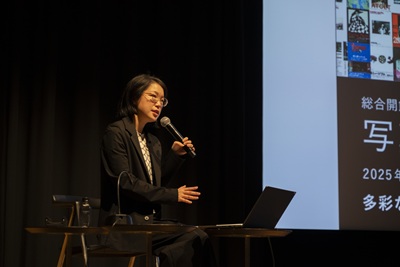
遠藤みゆき(以下遠藤):本トークセッション「アジアからの視点:写真史を複数化し再構成する」はアジアという地域に焦点を当てて開催いたします。
東京都写真美術館は開館当初から30年間にわたり世界各地の写真史・写真表現を紹介してきましたが、日本および欧米の作家に比べ、アジアの作家の展覧会での紹介機会やコレクションの収蔵数には圧倒的な差があるという現状があります。
しかし、この30年の間にアジア各国で写真研究が進展し、専門の美術館が設立されるなど状況は変化しています。東アジアと東南アジアは歴史的に日本と大きな関係を持ちます。アジアの写真資料を考察することは、翻って日本の写真史を再検証することにもつながるという重要な視点を提供します。
本セッションでは、各国の写真の歴史が「一つの大きな歴史に収斂されるものではない」という視点、すなわち多様性、多元性、複数性に焦点を当てたいと考えます。各国の研究成果を共有し、交流史といった国を超えた写真史の再検証が可能になることを期待し、この場を設けました。
当館の過去の取り組みとして、1996年に「エイジアン・ヴュー: 躍動するアジア」展は初めて明確にアジアをテーマに開催したグループ展と言えます。台湾の作家としては鄭桑渓(Cheng Shang-Hsi)と張照堂(Chang Chao-Tang)の作品をこの時に収蔵しました。
また、総合開館前の1992年には郎静山(Lang Jingshan)の作品も収蔵されています。また台湾出身の現代作家ではホウ・ルル・シュウズ(Hou Lulu Shur-tzy)の作品が、2018年開催「愛について アジアン・コンテンポラリー」展の後にコレクションに加わりました。
この展覧会は、家族や、セクシュアリティ、ジェンダーのあり方に焦点を当て、変わりゆくアジアの現在を紹介する展覧会として企画されました。東南アジアからはシンガポール出身のジェラルディン・カン(Geraldine Kang)が出品しています。
写真展に限らず、映像展や恵比寿映像祭への出品も含めて見れば、アジアの作家の作品を展示する機会は、決して少ないとは言えないのですが、写真の展覧会をベースにして考えると、その機会は限られています。また、地理的に近い東アジアの作家に比べ、東南アジアや南アジアの作家の機会は依然として限られているのが現状です。
そのため、これからの30年を考えるにあたり、アジアで活躍する研究者やキュレーターとアイデアや知識をシェアし、共同する機会の第一歩を本日作ることができたことを嬉しく思います。
登壇者を紹介します。ウー・スーイン(吳詩瀅/Goh Sze Ying)さんはナショナル・ギャラリー・シンガポール(以下NGS)のキュレーターを務めており、20世紀初頭から半ばにかけての東南アジアの写真と美術に焦点を当てたご研究、リサーチ、キュレーションをされています。チェン・ジャチー(陳佳琦/Chen Chia-Chi)さんは写真史および映像史を専門とする研究者であり、嘉義市立美術館館長を務められました。
東南アジアの写真における「複数性」と「混沌性」をめぐる写真的思考
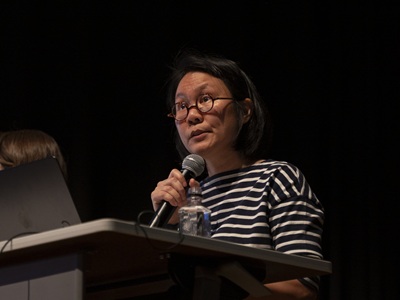
ウー・スーイン(以下ウー): まず初めに、東京都写真美術館の30周年記念という節目に、この場へお招きいただいた遠藤さんと同館の皆さまに心より感謝申し上げます。今年TOPが30周年を迎える一方で、私が所属するNGSは来月でちょうど10周年を迎えます。本日は、「複数性(plurality)」という概念、すなわち、私たちが写真を通じ、あるいは写真とともに行うリサーチや活動の中で、「複数であること(plural)」「多様であること(many)」「混沌としていること(messy)」がいかなる意味を持つのかについて考えてみたいと思います。
NGSは2015年に開館した、東南アジアの美術史を中心的に扱う現代美術館です。同館はシンガポール全体のナショナル・コレクション体系の一部を構成しており、写真は長らく、芸術作品としてではなく、主に歴史資料やアーカイブ用途の文書として収蔵されてきました。現在でも、写真作品の占める割合は所蔵全体の中でごくわずかにとどまっており、そのことが、写真を“空白領域”であると同時に、研究やキュレーションの新たな可能性を開く場として位置づけています。
ここで、マレーシア・サバ州出身のアーティスト、イー・イラン(Yee I-Lann)による《The Orang Besar Series: Fluid World》という作品をご紹介します。全長3メートルのテキスタイル作品で、海岸線や海洋を強調した地図が描かれ、その中心には東南アジアが「ど真ん中」に据えられています。この作品は、バティックの蝋防染技法と、1975年創業の長野県の印刷会社(株式会社ミマキエンジニアリング)が開発した酸性染料インクを布地に直接刷り込む高度なインクジェット技法とを組み合わせています。ここには、私たちが一般的に思い描く国民国家の枠組みや地域ブロックをはるかに超える、より広大で深い“地域のつながり”が示されています。
写真という媒介は、ときに「侵略的で、適応性の高い生物種」のように、しばしば美術館的な論理に逆行します。私たちはそれを歴史的価値のために収集しているのか、それとも芸術的価値のために収集しているのか。東南アジアにおいて、写真について「思考する」こと――調査し、収集し、記述し、展覧会を企画すること――は、この媒体が抱える“混沌(messiness)”、“多数性(manyness)”、そして“複数性(plurality)”を受け入れることを必然的に求めます。
東南アジアにおける写真研究の課題には、いくつかの要因があります。地域全体で写真史が不均質に発展してきたこと、熱帯気候が写真資料の保存に極めて不向きで良質な一次資料の確保が難しいこと、そして、収集機関ごとに所管が異なるため、ナショナル・コレクションにおいて「写真」を何と見なすのかが曖昧であることです。歴史的に、写真は主に公文書や行政記録としてアーカイブに収められ、芸術作品として扱われてこなかった背景があります。
こうした状況のもとで企画されたのが、2022~2023年に開催した展覧会「Living Pictures: Photography in Southeast Asia」です。本展は、地域における写真の“整然とした一次元的な歴史”を提示するためのものではなく、「写真には何ができるのか?」という問いを立てる試みとして構想されました。19世紀から現代に至る5つのセクションで構成され、最終章「Contemporary Imaginations」では、写真という媒介を用いて歴史と批判的、しばしば政治的に関わりながら、未来を思考する作品群を紹介しました。これらの多くは、アーカイブ写真やヴァナキュラー写真を用い、古い写真に潜む偏りや欠落を再考・補完する戦略として機能しています。
このように、写真が芸術として、そして“代理”として同時に働くというハイブリッドな性質は、同館の近現代美術史研究にとって非常に生産的な枠組みを提供しています。ナショナル・コレクションとは別に、館内の図書館・アーカイブも独自に写真、絵葉書、文書資料などを所蔵しており、主に研究目的の利用者に向けて機能しています。展覧会、コレクション、そしてリサーチという三位一体の実践を通じて、私たちは「写真的に思考する」ことが可能になります。すなわち、写真を本質的にモダンであり、常に同時代的であり続けるメディアとして捉え、過去と未来を同時に見通すための道具として扱うことができるのです。
台湾写真史の三つの研究段階と越境的視点
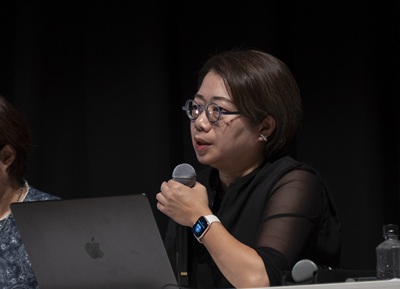
チェン・ジャチー(以下チェン):ウー氏の視点とは対照的で、私の報告は三つのステージから構成されています。
第一ステージとなるのは、私の研究の起点である報道写真です。写真への関心は1980年代、台湾が民主化へ向かう激動の時代に始まります。この時期は38年間続いた戒厳令(白色テロ)が解除され、社会運動が活発でした。
私は写真家・關曉榮(Guan Xiao-Rong)を研究しました。彼は1987年に核廃棄物貯蔵地に指定された離島・蘭嶼へ長期滞在し、観光写真が先住民に向ける暴力的な視線を反転させる形で撮影しました。こうした批判性・内省性に加え、アマチュア写真サークルの演出撮影を風刺する要素も含み、台湾内部の族群不平等と搾取を可視化する転換点となりました。
關の作品が典範として評価されたのは、社会主義の作家、陳映真(Chen Yingzhen)が創刊した月刊誌『人間』の存在が一部寄与しています。この時期は台湾における報道写真の最盛期でした。しかし、同誌は強い問題意識を持ち、社会改革を急務としていたため、掲載されたルポルタージュ写真が独立した「写真作品」として論じられることは稀でした。写真はルポルタージュと固く結びつき、常にテキストや社会的な関心が最優先されたのです。さらに、創刊者が主に文学者であったこともあり、雑誌内のイメージがアート界で議論されることはほとんどなく、文章や社会的なテーマが前面に出ていました。『人間』はまた、三留理男、福島菊次郎、樋口健二といった日本のリアリズム写真家を台湾に最初に紹介した媒体の一つでもあります。
80年代を台湾写真史の起点とみなすことには二つの落とし穴があります。一つは写真の創造性を軽視すること、もう一つは単線的・直線的な歴史観に陥ることです。こうした反省から、私の研究は第二ステージとしてアマチュア写真の領域へと進みました。1950~60年代の台湾のアマチュア写真を調べる中で、当時すでに越境的な写真文化ネットワークが存在していたことに気づいたのです。
当時の写真愛好家たちは日本の写真雑誌『日本カメラ』や『フォトアート』に積極的に投稿していました。戦前生まれで日本語を読む世代であった彼らは、自らの美学が台湾よりも日本本土で理解されやすいと感じていたようです。「組写真」や「心象風景」といった概念も、日本の雑誌の影響を受け、台湾とほぼ同時進行で形成されました。このことは、台湾写真史を島内だけで閉じた単一的な歴史としては捉えられず、越境性を前提に再構成する必要があることを示しています。
第三ステージは、戦後の資料消失のため研究が最も難しい植民地期(戦前)の再考です。 私は遠藤写真館の歴史に注目し、同館が日清戦争後に日本軍の台湾領有を記録した『征臺軍凱旋紀念帖』を出版した点に着目しました。
特筆すべきは、1920年代に日本の写真家・木村伊兵衛が台南の遠藤写真館で徒弟として修行していたという事実です。これは台湾写真史が、日本の植民地統治の歴史と美学的系譜において切り離すことのできない関係にあることを示しています。
さらに今後は、1980年代に民主化を経験した韓国などアジア諸地域との比較研究を進め、植民地、冷戦、地政学的課題をどのように共有していくべきかが問われます。
ディスカッション
遠藤:ウーさんのご発表を伺い、NGSという場所自体が東南アジアを代表するセンターとして期待されていると感じています。東南アジアは各国それぞれの歴史的背景、宗教、人種、文化が全く異なっており、その複雑に交差する歴史の中で写真史を形作ることの難しさを改めて実感しました。
そうした中で、NGSにおける写真作品の収蔵に関して、何らかの指針や計画は定められているのでしょうか。あるいは、当館のように開催する展覧会によって収蔵作品が決まる面もあるかと思いますが、今後、NGSで写真作品を収蔵していく上での方向性があれば教えてください。
ウー: 東南アジアにおける写真表現は、その発展が地域間で不均一、あるいは非対称であるため、コレクションを地域全体として捉えることは確かに難しい面があります。私たちのコレクションの使命が地域に焦点を当てることにある以上、地理的要素はきわめて重要になります。私たちは「東南アジア出身の写真家」に限定するのではなく、「東南アジアで活動した写真家」も対象に含めています。たとえば、1910年代から1930年代にかけて海峡植民地、スマトラ、ジャワ、バリを横断して活動した写真家・中島(Mr. Nakajima)などが挙げられます。 また、東南アジアにルーツを持ちながら現在は他国で活動するディアスポラのアーティストにも注目しています。フィリピン系アメリカ人アーティストのステファニー・シフーコなどがその例です。このように、私たちは「東南アジア」を固定的な地理概念ではなく、「構成概念(construct)」として捉えています。
写真はアートオブジェクトであると同時に、文書やアーカイブとしても機能します。その多層性ゆえに、私たちはしばしば、作品が社会史的意義を超えて「芸術的価値」を持つかどうかを問われます。「アートか社会史か」という緊張関係は常に存在し、特に1960年代以前、写真家が自らを「アーティスト」と認識していなかった時代の作品を扱う際に顕著です。
遠藤:今のお話を伺い、写真美術館という我々の施設においても、美術館という名前がついているがゆえに、基本的にはアート作品と呼べるものが収蔵対象となっているということを改めて思い出します。これによって、重要なアーカイブ的な資料であっても、収蔵することが難しい場合もあります。
チェンさんのご発表では、日本の写真家や雑誌との交流、美術館では見落とされがちなアマチュアの写真家の作品など、詳細に教えていただきました。台湾国内において、チェンさんがどのように写真史研究を始められたのか、また、写真史や写真批評を教える専門的な大学や機関があるのかどうか、ご自身の経験も含めて現状を教えていただけますでしょうか。日本においても、写真研究は長らく美術史的な研究の射程内で行われており、写真専門の教育機関の維持が難しい側面もあると感じています。
チェン:私が写真史研究に入り込んだきっかけは、修士論文で月刊誌『人間』の報道写真を扱ったことでした。一方、博士論文では台湾文学を専攻しました。私にとって、文学と芸術は台湾史のなかで明確に区別できるものではありません。戦後の台湾には、自分たちの歴史を語ることができなかった時期がありました。私は台湾の歴史そのものに強い関心があり、写真への興味は、その欠落を埋める一つの方法だったと思います。つまり、写真史の研究とは、私にとって「台湾とは何か」「台湾人とは誰か」を問い直す作業であり、国家の地位が未だ不確定である台湾の特殊な歴史状況と深く関係しています。
台湾には写真史を専門とする教育機関は存在しません。多くの場合、美術系やマルチメディア系のなかで、個々の教授の関心によって授業が成立しているというのが実情です。
写真史を専門的に研究する人はまだ非常に少なく、この分野には今後大きな発展の余地があると感じています。
遠藤:お二人のご発表を通して、写真を論じる際の重要な論点がいくつも提示されました。
ウーさんからは、写真作品と写真資料の境界設定や、写真というメディアが内包する複数性について。チェン氏からは、美術館では見落とされがちなアマチュア写真家の存在に焦点が当たりました。そして、国や地域を横断しながら写真史を考えていくこと、すなわち日本の外から日本を見直すという重要な視点が改めて指摘されました。
ウーさんへの質問への回答では、東南アジアを包括的にコレクションするため、「東南アジアで活動していた写真家」(日本の巡回写真家を含む)を対象とする地理的視点と、「ディアスポラの作家」を収集する方針が示されました。また、写真が「アート 対 社会史」の議論に常に直面しているという点も共有されました。
チェンさんからは、台湾の写真史研究が、戦後の特殊な背景から、台湾史への関心(「台湾とは何か」)とともに文学研究を切り口として始まった経緯が示されました。また、アマチュア写真の分野における日本の写真雑誌への積極的な投稿や、木村伊兵衛の修行地が遠藤写真館であったという事実は、日台間の歴史が不可分であることを示唆しています。さらに、台湾には写真史専門の教育機関がないという現状も共有されました。
日本においても写真研究は長らくメインストリームではありませんでした。しかし、こうして各国・地域の研究者、キュレーターと共に話す機会を持つことで、私たちは「一人ではない」「マイノリティではない」ということを改めて感じ、大変励まされる思いをいたしました。
本日、長時間にわたり、ウーさんとチェンさん、そして円滑な進行にご協力いただいた通訳の皆様、そしてご参加いただいた会場の皆様に心より感謝申し上げます。
TOP 30th Anniversary Talk Session
From Asian Perspectives: Pluralizing and Reframing Photographic Histories
Date:
October 18, 2025, 14:30-16:30
Speakers:
Goh Sze Ying (Curator of National Gallery Singapore)
Chen Chia-Chi (Photographic Historian)
Endo Miyuki (Curator of Tokyo Photographic Art Museum, Moderator)
Introduction: Toward Plural Photographic Histories
Endo Miyuki (EM): Today’s session, “Perspectives from Asia: Pluralizing and Reconfiguring Photographic Histories,” is organized with a specific focus on the region of Asia.
For the past thirty years since its opening, the Tokyo Photographic Art Museum (TOP) has introduced photographic histories and photographic expression from around the world. However, compared to exhibitions and collections featuring Japanese and Euro-American photographers, the opportunities to present and collect works by Asian artists have been significantly limited.
Over these three decades, however, the situation across Asia has begun to change. Photographic studies have advanced in many countries, and dedicated art museums have been established. Both East and Southeast Asia share deep historical connections with Japan, and engaging with photographic materials from across Asia also provides an important lens through which to reconsider the history of photography in Japan.
In this session, we would like to focus on the idea that photographic histories in each country do not converge into a single, unified narrative. Instead, we aim to foreground diversity, multiplicity, and plurality. By sharing research outcomes from various regions, we hope to facilitate a re-examination of photographic histories that transcend national boundaries within a broader history of intercultural exchange.
Looking back at TOP’s previous initiatives, the 1996 exhibition “Asian View: Asia in Transition” was the museum’s first group exhibition explicitly centered on Asia. As forTaiwanese artists, the works by Cheng Shang-Hsi and Chang Chao-Tang were acquired on this occasion.
Even earlier, in 1992—before the museum’s full opening—works by Lang Jingshan had already been added to the collection. More recently, after the 2018 exhibition “I know something about love, asian contemporary photography” works by Hou Lulu Shur-tzy were incorporated into the museum’s holdings.
The exhibition was organized to explore themes of family, sexuality, and gender, presenting a portrait of contemporary Asia in transition. From Southeast Asia, it featured Singaporean artist Geraldine Kang.
Although TOP has showcased Asian artists through moving-image exhibitions and festivals as well, when we look specifically at photography exhibitions, it becomes clear that the opportunities remain limited. Moreover, compared to artists from geographically closer East Asia, opportunities for artists from Southeast Asia and South Asia continue to be particularly scarce.
With the next thirty years in mind, we are delighted to take this occasion as a first step toward sharing ideas and knowledge with researchers and curators active across Asia, and to explore new possibilities for collaboration.
Let me introduce today’s speakers. Ms. Goh Sze Ying, curator at the National Gallery Singapore, specializes in photography and art from Southeast Asia, particularly from the early to mid-twentieth century. Ms. Chen Chia-Chi, a researcher specializing in the histories of photography and moving images, has also served as the Director of The Chiayi Art Museum.
Photographic Thinking Through “Plurality” and “Messiness” in Southeast Asia
Goh Sze Ying (GSY): First, I would like to thank Ms. Endo and the Tokyo Photographic Art Museum for inviting me to be part of the museum's 30th anniversary celebration. As TOP celebrates its 30th anniversary this year, National Gallery Singapore, where I come from, will turn 10 next month. Today, I would like to dwell on the idea of plurality — what it means to be “plural”, to be “many”, and to be “messy” in the research and the work that we do with and through photography.
National Gallery Singapore(NGS), founded in 2015, is a modern art museum dedicated to the art histories of Southeast Asia. It sits within Singapore’s broader National Collection system, where photography historically entered the collection mainly as historical documents and archival materials rather than as art. Today, photographs still form only a small percentage of the Gallery’s holdings, which makes photography both a gap and a productive site for research and curatorial work.
I would like to introduce an artwork titled The Orang Besar Series: Fluid World by Malaysian Sabahan artist Yee I-Lann. This three-metre-long textile features a map that is deliberately coastal and oceanic, with Southeast Asia placed smack in the middle. It combines the wax-resist dye technique of batik with a precise method of printing acid dye ink directly onto fabric using a digital inkjet technique developed by a Nagano-based printing company established in 1975. The work points to an interconnectedness of the region that is far vaster than our contemporary imagination of nation-states or regional blocs.
Photographs are an invasive and adaptable species that sometimes run against museological logic. Do we collect them for their historical significance, or do we collect them for their artistic value? To think photographically in a museum in Southeast Asia — to research, to collect, to write, to curate exhibitions — requires embracing the messiness, the manyness, and the plurality of the medium’s histories.
The challenges of researching photography in Southeast Asia stem from several factors: the uneven development of photographic histories across the region; the difficulty of locating good-quality primary materials, as our tropical climates are not friendly to the fragility of photographic objects; and a lack of clarity over what constitutes “photographs” within the National Collection because different collecting institutions have different remits. Photography was historically collected primarily as documentary material for archives and government records rather than as art.
Against this backdrop, the exhibition Living Pictures: Photography in Southeast Asia (2022–2023) was conceived less as a neat, linear history of photography in the region and more as a way of asking, “What can photographs do?”. Structured in five sections from the 19th century to the present, the exhibition culminated in a final section titled Contemporary Imaginations, which presents works that incorporate the photographic in critical — and often political — engagements with histories and with speculative futures. Many of these works use archival and vernacular photographs as strategies to recuperate photographic biases and the omissions found in older images.
This particular hybridity — the way photography functions at once as art and as a surrogate — offers a productive framework for modern art historical concerns at the Gallery. Alongside the National Collection, the Gallery’s library and archive hold their own sets of photographs, postcards, and documents, serving a different group of users primarily concerned with research. Together, exhibitions, collections, and research form a triad through which we can “think photographically”, treating photography as a medium that is intrinsically modern and persistently contemporary, and using it to look simultaneously towards both the past and the future.
Three Stages of Taiwanese Photographic History and Its Transnational Perspectives
Chen Chia-Chi (CC): In contrast to Ms. Goh’s perspective, my report is structured around three stages.
The first stage begins with photojournalism, which was the starting point of my research.
My interest in photography emerged in the 1980s, a turbulent period when Taiwan was moving toward democratization. This was the moment when the 38-year-long Martial Law—the so-called “White Terror”—was finally lifted, and various social movements surged across society.
I studied the photographer Guan Xiao-Rong. In 1987, he spent an extended period on Lanyu (Orchid Island), which had been designated as a nuclear waste storage site. His photographs reverse the violent gaze cast by commercial tourist photography on Indigenous peoples, embedding critique and introspection within his visual language. At the same time, his work also satirized the practices of amateur photography clubs, which often is by paying local residents. His series thus exposed the long-standing issues of ethnic inequality and exploitation within Taiwanese society.
Guan’s work became exemplary partly due to the monthly magazine Renjian founded by the socialist writer Chen Ying-zhen. This period marked a peak in Taiwanese photojournalism. However, because of the magazine’s strongly issue-driven character and the urgency of its calls for social reform, the reportage photographs it published were seldom discussed as photographic works in their own right. Instead, the images remained tightly bound to the reportage, with textual and social concerns consistently placed at the forefront. Yet, because the founder was primarily a literary figure, the imagery in the magazine was rarely discussed within the art world; textual and social themes were foregrounded instead. Renjian was also among the first media outlets in Taiwan to introduce Japanese realist photographers such as Mitome Tadao, Fukushima Kikujiro, and Higuchi Kenji.
There are two pitfalls in taking the 1980s as the starting point of Taiwanese photographic history. One is the neglect of photography’s artistic creativity; the other is the risk of falling into a single, linear historical narrative. These reflections led my research into the second stage, which focuses on amateur photography. Through studying amateur practices in the 1950s and 1960s, I realized that transnational photographic networks already existed during this period.
Amateur photographers frequently submitted their works to Japanese photography magazines such as Nippon Camera and Photo Art. As a generation born before World War II with the ability to read Japanese, many felt that their aesthetic orientation was more readily understood—and even validated—within the Japanese mainland context. Concepts such as “narrative photographic sequences” (kumi-shashin) and “inner landscapes” (shinshō fūkei) emerged in Taiwan almost simultaneously under the influence of these magazines. These examples demonstrate that Taiwanese photographic history cannot be understood as an isolated, domestic narrative; rather, it must be reconstructed with transnationality as its premise.
The third stage concerns the re-examination of the colonial period (pre-1945), which is the most challenging part of the research due to significant postwar archival loss.
I turned my attention to the history of Endo Photography Studio, which published The Commemorative Album of the Triumphant Return of the Taiwan Expeditionary Forces following Japan’s occupation of Taiwan after the First Sino-Japanese War. What is particularly noteworthy is the fact that Kimura Ihei, the renowned Japanese photographer, trained as an apprentice at Endo Photography Studio in Tainan during the 1920s. This reveals that Taiwanese photographic history is inseparable from the histories and aesthetic genealogies of Japanese colonial rule.
Looking ahead, it is crucial to develop comparative studies with other Asian regions—such as South Korea, which also underwent democratization in the 1980s—to better understand how colonialism, the Cold War, and geopolitical conditions have been shared or diverged across Asia.
Discussion
EM: Listening to your presentation, Ms. Goh, I was struck by how the National Gallery Singapore is positioned—and indeed expected—to serve as a central institution representing Southeast Asia. The region is characterized by vastly different historical trajectories, religions, ethnicities, and cultures across its countries, and your talk reminded me of the inherent difficulty of shaping a photographic history within such a complex and intersecting landscape.
In that context, I would like to ask about the collecting policy at NGS. Do you have specific guidelines or long-term plans for acquiring photographic works? Alternatively, as in our institution, are acquisitions largely determined by the exhibitions that you organize? I would appreciate hearing about the broader direction you envision for the future of photography acquisitions at NGS.
GSY: It is indeed challenging to think regionally from a collecting perspective, given the uneven—or even asymmetrical—development of photographic practices across Southeast Asia. Since our mandate is to focus on the region, geography naturally plays a significant role. We consider not only photographers who are from Southeast Asia, but also those who have worked within the region. This includes itinerant Japanese photographers — most notably Mr. Nakajima, who worked across the Straits Settlements, Sumatra, Java, and Bali from the 1910s to the 1930s. We also pay close attention to diasporic artists who are of Southeast Asian origin or descent but are now based elsewhere—for example, the Filipino American artist Stephanie Syjuco. In this sense, we approach “Southeast Asia” as a construct rather than as a fixed geographical category.
The photograph is not only an art object; it often operates as a document or an archival material. Because of this plurality, we are frequently asked to justify whether a work possesses artistic value beyond its social or historical significance. The tension between “art” and “social history” is something we constantly navigate—particularly in dealing with works produced before the 1960s, when photographers in the region did not yet identify themselves as “artists.”
Endo: Hearing your comments, I am reminded that our own institution, as a “museum of photography,” tends to acquire works that can be framed as art. As a result, there are cases in which photographically significant archival materials are difficult to collect, despite their importance.
In your presentation, you provided valuable insights into exchanges with Japanese photographers and magazines, as well as the work of amateur photographers who are often overlooked by art museums. Could you tell us how you first began your research in photographic history within Taiwan? Are there any universities or institutions that specialize in teaching photographic history or criticism? We would also appreciate hearing about your own experience in this regard. In Japan as well, photographic studies have long been situated within the broader field of art history, and maintaining specialized institutions for photographic research has proven challenging.
CC: I first entered the field of photographic history through my master’s thesis, which examined photojournalism in the magazine Renjian. My doctoral work, however, was in Taiwanese literature. For me, literature and art are inseparable within the context of Taiwanese history—there is no clear boundary between them. Taiwan experienced a long postwar period during which it could not speak its own history. I have always been deeply interested in that historical gap. My interest in photography grew out of a desire to understand and reconstruct what had been lost. In this sense, researching photographic history is, for me, a way of asking fundamental questions: “What is Taiwan?” and “Who are the Taiwanese people?” These questions are rooted in Taiwan’s still undetermined national status and its complex historical condition.
In Taiwan, there are no dedicated institutions for the study of photographic history. Most teaching related to photography takes place within art departments or multimedia programs, and the content often depends on the interests of a single professor.
Scholars who specialize in photographic history remain a small minority. For this reason, I believe this is a field with significant room for further development.
EM: Through your presentations, many important issues regarding how we discuss photography were brought to light.
From Ms. Goh, we heard about the challenge of defining the boundaries between photographic artworks and photographic documents, as well as the multiplicity inherent in the medium and outputs.
From Ms. Chen, we were reminded of the significance of amateur photographers whose contributions are often overlooked within museum contexts. Both talks emphasized the need to reconsider photographic history across national and regional borders—indeed, to re-examine Japan from outside Japan, which is a crucial perspective.
In response to the question addressed to Ms. Goh, she outlined a collecting approach that seeks to encompass Southeast Asia by focusing not only on photographers from the region but also those who worked in it, including itinerant Japanese photographers. She also highlighted the importance of including diasporic artists in the collection. Additionally, she pointed out the persistent tension within photography between its artistic value and its role in social history.
From Ms. Chen, we learned how the study of Taiwanese photographic history began within the particular conditions of the postwar period—through an inquiry into Taiwanese literature and, more fundamentally, into the questions “What is Taiwan?” and “Who are the Taiwanese people?” Her discussion of amateur photographers’ active engagement with Japanese photography magazines, and the fact that Kimura Ihei once trained at Endo Photography Studio in Tainan, further illustrated the inseparable historical ties between Taiwan and Japan. She also shared the current situation in Taiwan, where no institution specializes in the study of photographic history.
In Japan as well, photographic studies have long remained outside the academic mainstream. Yet having the opportunity to engage in dialogue with researchers and curators from across different countries and regions has reassured us that we are not alone—that we are not a minority in this field. I found this immensely encouraging.
I would like to express my sincere gratitude to Ms. Goh and Ms. Chen for their generous presentations, to the interpreters for their invaluable support, and to everyone here today for your participation and attention.
「アジアからの視点:写真史を複数化し再構成する」
日 時:
2025年10月18日(土)14:30-16:30
登壇者:
ウー・スーイン 吳詩瀅(ナショナル・ギャラリー・シンガポールキュレーター)
チェン・ジャチー 陳佳琦(写真史家)
遠藤みゆき(東京都写真美術館 学芸員、モデレーター)
導入:写真史の複数化への視点
遠藤みゆき(以下遠藤):本トークセッション「アジアからの視点:写真史を複数化し再構成する」はアジアという地域に焦点を当てて開催いたします。
東京都写真美術館は開館当初から30年間にわたり世界各地の写真史・写真表現を紹介してきましたが、日本および欧米の作家に比べ、アジアの作家の展覧会での紹介機会やコレクションの収蔵数には圧倒的な差があるという現状があります。
しかし、この30年の間にアジア各国で写真研究が進展し、専門の美術館が設立されるなど状況は変化しています。東アジアと東南アジアは歴史的に日本と大きな関係を持ちます。アジアの写真資料を考察することは、翻って日本の写真史を再検証することにもつながるという重要な視点を提供します。
本セッションでは、各国の写真の歴史が「一つの大きな歴史に収斂されるものではない」という視点、すなわち多様性、多元性、複数性に焦点を当てたいと考えます。各国の研究成果を共有し、交流史といった国を超えた写真史の再検証が可能になることを期待し、この場を設けました。
当館の過去の取り組みとして、1996年に「エイジアン・ヴュー: 躍動するアジア」展は初めて明確にアジアをテーマに開催したグループ展と言えます。台湾の作家としては鄭桑渓(Cheng Shang-Hsi)と張照堂(Chang Chao-Tang)の作品をこの時に収蔵しました。
また、総合開館前の1992年には郎静山(Lang Jingshan)の作品も収蔵されています。また台湾出身の現代作家ではホウ・ルル・シュウズ(Hou Lulu Shur-tzy)の作品が、2018年開催「愛について アジアン・コンテンポラリー」展の後にコレクションに加わりました。
この展覧会は、家族や、セクシュアリティ、ジェンダーのあり方に焦点を当て、変わりゆくアジアの現在を紹介する展覧会として企画されました。東南アジアからはシンガポール出身のジェラルディン・カン(Geraldine Kang)が出品しています。
写真展に限らず、映像展や恵比寿映像祭への出品も含めて見れば、アジアの作家の作品を展示する機会は、決して少ないとは言えないのですが、写真の展覧会をベースにして考えると、その機会は限られています。また、地理的に近い東アジアの作家に比べ、東南アジアや南アジアの作家の機会は依然として限られているのが現状です。
そのため、これからの30年を考えるにあたり、アジアで活躍する研究者やキュレーターとアイデアや知識をシェアし、共同する機会の第一歩を本日作ることができたことを嬉しく思います。
登壇者を紹介します。ウー・スーイン(吳詩瀅/Goh Sze Ying)さんはナショナル・ギャラリー・シンガポール(以下NGS)のキュレーターを務めており、20世紀初頭から半ばにかけての東南アジアの写真と美術に焦点を当てたご研究、リサーチ、キュレーションをされています。チェン・ジャチー(陳佳琦/Chen Chia-Chi)さんは写真史および映像史を専門とする研究者であり、嘉義市立美術館館長を務められました。
東南アジアの写真における「複数性」と「混沌性」をめぐる写真的思考
ウー・スーイン(以下ウー): まず初めに、東京都写真美術館の30周年記念という節目に、この場へお招きいただいた遠藤さんと同館の皆さまに心より感謝申し上げます。今年TOPが30周年を迎える一方で、私が所属するNGSは来月でちょうど10周年を迎えます。本日は、「複数性(plurality)」という概念、すなわち、私たちが写真を通じ、あるいは写真とともに行うリサーチや活動の中で、「複数であること(plural)」「多様であること(many)」「混沌としていること(messy)」がいかなる意味を持つのかについて考えてみたいと思います。
NGSは2015年に開館した、東南アジアの美術史を中心的に扱う現代美術館です。同館はシンガポール全体のナショナル・コレクション体系の一部を構成しており、写真は長らく、芸術作品としてではなく、主に歴史資料やアーカイブ用途の文書として収蔵されてきました。現在でも、写真作品の占める割合は所蔵全体の中でごくわずかにとどまっており、そのことが、写真を“空白領域”であると同時に、研究やキュレーションの新たな可能性を開く場として位置づけています。
ここで、マレーシア・サバ州出身のアーティスト、イー・イラン(Yee I-Lann)による《The Orang Besar Series: Fluid World》という作品をご紹介します。全長3メートルのテキスタイル作品で、海岸線や海洋を強調した地図が描かれ、その中心には東南アジアが「ど真ん中」に据えられています。この作品は、バティックの蝋防染技法と、1975年創業の長野県の印刷会社(株式会社ミマキエンジニアリング)が開発した酸性染料インクを布地に直接刷り込む高度なインクジェット技法とを組み合わせています。ここには、私たちが一般的に思い描く国民国家の枠組みや地域ブロックをはるかに超える、より広大で深い“地域のつながり”が示されています。
写真という媒介は、ときに「侵略的で、適応性の高い生物種」のように、しばしば美術館的な論理に逆行します。私たちはそれを歴史的価値のために収集しているのか、それとも芸術的価値のために収集しているのか。東南アジアにおいて、写真について「思考する」こと――調査し、収集し、記述し、展覧会を企画すること――は、この媒体が抱える“混沌(messiness)”、“多数性(manyness)”、そして“複数性(plurality)”を受け入れることを必然的に求めます。
東南アジアにおける写真研究の課題には、いくつかの要因があります。地域全体で写真史が不均質に発展してきたこと、熱帯気候が写真資料の保存に極めて不向きで良質な一次資料の確保が難しいこと、そして、収集機関ごとに所管が異なるため、ナショナル・コレクションにおいて「写真」を何と見なすのかが曖昧であることです。歴史的に、写真は主に公文書や行政記録としてアーカイブに収められ、芸術作品として扱われてこなかった背景があります。
こうした状況のもとで企画されたのが、2022~2023年に開催した展覧会「Living Pictures: Photography in Southeast Asia」です。本展は、地域における写真の“整然とした一次元的な歴史”を提示するためのものではなく、「写真には何ができるのか?」という問いを立てる試みとして構想されました。19世紀から現代に至る5つのセクションで構成され、最終章「Contemporary Imaginations」では、写真という媒介を用いて歴史と批判的、しばしば政治的に関わりながら、未来を思考する作品群を紹介しました。これらの多くは、アーカイブ写真やヴァナキュラー写真を用い、古い写真に潜む偏りや欠落を再考・補完する戦略として機能しています。
このように、写真が芸術として、そして“代理”として同時に働くというハイブリッドな性質は、同館の近現代美術史研究にとって非常に生産的な枠組みを提供しています。ナショナル・コレクションとは別に、館内の図書館・アーカイブも独自に写真、絵葉書、文書資料などを所蔵しており、主に研究目的の利用者に向けて機能しています。展覧会、コレクション、そしてリサーチという三位一体の実践を通じて、私たちは「写真的に思考する」ことが可能になります。すなわち、写真を本質的にモダンであり、常に同時代的であり続けるメディアとして捉え、過去と未来を同時に見通すための道具として扱うことができるのです。
台湾写真史の三つの研究段階と越境的視点
チェン・ジャチー(以下チェン):ウー氏の視点とは対照的で、私の報告は三つのステージから構成されています。
第一ステージとなるのは、私の研究の起点である報道写真です。写真への関心は1980年代、台湾が民主化へ向かう激動の時代に始まります。この時期は38年間続いた戒厳令(白色テロ)が解除され、社会運動が活発でした。
私は写真家・關曉榮(Guan Xiao-Rong)を研究しました。彼は1987年に核廃棄物貯蔵地に指定された離島・蘭嶼へ長期滞在し、観光写真が先住民に向ける暴力的な視線を反転させる形で撮影しました。こうした批判性・内省性に加え、アマチュア写真サークルの演出撮影を風刺する要素も含み、台湾内部の族群不平等と搾取を可視化する転換点となりました。
關の作品が典範として評価されたのは、社会主義の作家、陳映真(Chen Yingzhen)が創刊した月刊誌『人間』の存在が一部寄与しています。この時期は台湾における報道写真の最盛期でした。しかし、同誌は強い問題意識を持ち、社会改革を急務としていたため、掲載されたルポルタージュ写真が独立した「写真作品」として論じられることは稀でした。写真はルポルタージュと固く結びつき、常にテキストや社会的な関心が最優先されたのです。さらに、創刊者が主に文学者であったこともあり、雑誌内のイメージがアート界で議論されることはほとんどなく、文章や社会的なテーマが前面に出ていました。『人間』はまた、三留理男、福島菊次郎、樋口健二といった日本のリアリズム写真家を台湾に最初に紹介した媒体の一つでもあります。
80年代を台湾写真史の起点とみなすことには二つの落とし穴があります。一つは写真の創造性を軽視すること、もう一つは単線的・直線的な歴史観に陥ることです。こうした反省から、私の研究は第二ステージとしてアマチュア写真の領域へと進みました。1950~60年代の台湾のアマチュア写真を調べる中で、当時すでに越境的な写真文化ネットワークが存在していたことに気づいたのです。
当時の写真愛好家たちは日本の写真雑誌『日本カメラ』や『フォトアート』に積極的に投稿していました。戦前生まれで日本語を読む世代であった彼らは、自らの美学が台湾よりも日本本土で理解されやすいと感じていたようです。「組写真」や「心象風景」といった概念も、日本の雑誌の影響を受け、台湾とほぼ同時進行で形成されました。このことは、台湾写真史を島内だけで閉じた単一的な歴史としては捉えられず、越境性を前提に再構成する必要があることを示しています。
第三ステージは、戦後の資料消失のため研究が最も難しい植民地期(戦前)の再考です。 私は遠藤写真館の歴史に注目し、同館が日清戦争後に日本軍の台湾領有を記録した『征臺軍凱旋紀念帖』を出版した点に着目しました。
特筆すべきは、1920年代に日本の写真家・木村伊兵衛が台南の遠藤写真館で徒弟として修行していたという事実です。これは台湾写真史が、日本の植民地統治の歴史と美学的系譜において切り離すことのできない関係にあることを示しています。
さらに今後は、1980年代に民主化を経験した韓国などアジア諸地域との比較研究を進め、植民地、冷戦、地政学的課題をどのように共有していくべきかが問われます。
ディスカッション
遠藤:ウーさんのご発表を伺い、NGSという場所自体が東南アジアを代表するセンターとして期待されていると感じています。東南アジアは各国それぞれの歴史的背景、宗教、人種、文化が全く異なっており、その複雑に交差する歴史の中で写真史を形作ることの難しさを改めて実感しました。
そうした中で、NGSにおける写真作品の収蔵に関して、何らかの指針や計画は定められているのでしょうか。あるいは、当館のように開催する展覧会によって収蔵作品が決まる面もあるかと思いますが、今後、NGSで写真作品を収蔵していく上での方向性があれば教えてください。
ウー: 東南アジアにおける写真表現は、その発展が地域間で不均一、あるいは非対称であるため、コレクションを地域全体として捉えることは確かに難しい面があります。私たちのコレクションの使命が地域に焦点を当てることにある以上、地理的要素はきわめて重要になります。私たちは「東南アジア出身の写真家」に限定するのではなく、「東南アジアで活動した写真家」も対象に含めています。たとえば、1910年代から1930年代にかけて海峡植民地、スマトラ、ジャワ、バリを横断して活動した写真家・中島(Mr. Nakajima)などが挙げられます。 また、東南アジアにルーツを持ちながら現在は他国で活動するディアスポラのアーティストにも注目しています。フィリピン系アメリカ人アーティストのステファニー・シフーコなどがその例です。このように、私たちは「東南アジア」を固定的な地理概念ではなく、「構成概念(construct)」として捉えています。
写真はアートオブジェクトであると同時に、文書やアーカイブとしても機能します。その多層性ゆえに、私たちはしばしば、作品が社会史的意義を超えて「芸術的価値」を持つかどうかを問われます。「アートか社会史か」という緊張関係は常に存在し、特に1960年代以前、写真家が自らを「アーティスト」と認識していなかった時代の作品を扱う際に顕著です。
遠藤:今のお話を伺い、写真美術館という我々の施設においても、美術館という名前がついているがゆえに、基本的にはアート作品と呼べるものが収蔵対象となっているということを改めて思い出します。これによって、重要なアーカイブ的な資料であっても、収蔵することが難しい場合もあります。
チェンさんのご発表では、日本の写真家や雑誌との交流、美術館では見落とされがちなアマチュアの写真家の作品など、詳細に教えていただきました。台湾国内において、チェンさんがどのように写真史研究を始められたのか、また、写真史や写真批評を教える専門的な大学や機関があるのかどうか、ご自身の経験も含めて現状を教えていただけますでしょうか。日本においても、写真研究は長らく美術史的な研究の射程内で行われており、写真専門の教育機関の維持が難しい側面もあると感じています。
チェン:私が写真史研究に入り込んだきっかけは、修士論文で月刊誌『人間』の報道写真を扱ったことでした。一方、博士論文では台湾文学を専攻しました。私にとって、文学と芸術は台湾史のなかで明確に区別できるものではありません。戦後の台湾には、自分たちの歴史を語ることができなかった時期がありました。私は台湾の歴史そのものに強い関心があり、写真への興味は、その欠落を埋める一つの方法だったと思います。つまり、写真史の研究とは、私にとって「台湾とは何か」「台湾人とは誰か」を問い直す作業であり、国家の地位が未だ不確定である台湾の特殊な歴史状況と深く関係しています。
台湾には写真史を専門とする教育機関は存在しません。多くの場合、美術系やマルチメディア系のなかで、個々の教授の関心によって授業が成立しているというのが実情です。
写真史を専門的に研究する人はまだ非常に少なく、この分野には今後大きな発展の余地があると感じています。
遠藤:お二人のご発表を通して、写真を論じる際の重要な論点がいくつも提示されました。
ウーさんからは、写真作品と写真資料の境界設定や、写真というメディアが内包する複数性について。チェン氏からは、美術館では見落とされがちなアマチュア写真家の存在に焦点が当たりました。そして、国や地域を横断しながら写真史を考えていくこと、すなわち日本の外から日本を見直すという重要な視点が改めて指摘されました。
ウーさんへの質問への回答では、東南アジアを包括的にコレクションするため、「東南アジアで活動していた写真家」(日本の巡回写真家を含む)を対象とする地理的視点と、「ディアスポラの作家」を収集する方針が示されました。また、写真が「アート 対 社会史」の議論に常に直面しているという点も共有されました。
チェンさんからは、台湾の写真史研究が、戦後の特殊な背景から、台湾史への関心(「台湾とは何か」)とともに文学研究を切り口として始まった経緯が示されました。また、アマチュア写真の分野における日本の写真雑誌への積極的な投稿や、木村伊兵衛の修行地が遠藤写真館であったという事実は、日台間の歴史が不可分であることを示唆しています。さらに、台湾には写真史専門の教育機関がないという現状も共有されました。
日本においても写真研究は長らくメインストリームではありませんでした。しかし、こうして各国・地域の研究者、キュレーターと共に話す機会を持つことで、私たちは「一人ではない」「マイノリティではない」ということを改めて感じ、大変励まされる思いをいたしました。
本日、長時間にわたり、ウーさんとチェンさん、そして円滑な進行にご協力いただいた通訳の皆様、そしてご参加いただいた会場の皆様に心より感謝申し上げます。
TOP 30th Anniversary Talk Session
From Asian Perspectives: Pluralizing and Reframing Photographic Histories
Date:
October 18, 2025, 14:30-16:30
Speakers:
Goh Sze Ying (Curator of National Gallery Singapore)
Chen Chia-Chi (Photographic Historian)
Endo Miyuki (Curator of Tokyo Photographic Art Museum, Moderator)
Introduction: Toward Plural Photographic Histories
Endo Miyuki (EM): Today’s session, “Perspectives from Asia: Pluralizing and Reconfiguring Photographic Histories,” is organized with a specific focus on the region of Asia.
For the past thirty years since its opening, the Tokyo Photographic Art Museum (TOP) has introduced photographic histories and photographic expression from around the world. However, compared to exhibitions and collections featuring Japanese and Euro-American photographers, the opportunities to present and collect works by Asian artists have been significantly limited.
Over these three decades, however, the situation across Asia has begun to change. Photographic studies have advanced in many countries, and dedicated art museums have been established. Both East and Southeast Asia share deep historical connections with Japan, and engaging with photographic materials from across Asia also provides an important lens through which to reconsider the history of photography in Japan.
In this session, we would like to focus on the idea that photographic histories in each country do not converge into a single, unified narrative. Instead, we aim to foreground diversity, multiplicity, and plurality. By sharing research outcomes from various regions, we hope to facilitate a re-examination of photographic histories that transcend national boundaries within a broader history of intercultural exchange.
Looking back at TOP’s previous initiatives, the 1996 exhibition “Asian View: Asia in Transition” was the museum’s first group exhibition explicitly centered on Asia. As forTaiwanese artists, the works by Cheng Shang-Hsi and Chang Chao-Tang were acquired on this occasion.
Even earlier, in 1992—before the museum’s full opening—works by Lang Jingshan had already been added to the collection. More recently, after the 2018 exhibition “I know something about love, asian contemporary photography” works by Hou Lulu Shur-tzy were incorporated into the museum’s holdings.
The exhibition was organized to explore themes of family, sexuality, and gender, presenting a portrait of contemporary Asia in transition. From Southeast Asia, it featured Singaporean artist Geraldine Kang.
Although TOP has showcased Asian artists through moving-image exhibitions and festivals as well, when we look specifically at photography exhibitions, it becomes clear that the opportunities remain limited. Moreover, compared to artists from geographically closer East Asia, opportunities for artists from Southeast Asia and South Asia continue to be particularly scarce.
With the next thirty years in mind, we are delighted to take this occasion as a first step toward sharing ideas and knowledge with researchers and curators active across Asia, and to explore new possibilities for collaboration.
Let me introduce today’s speakers. Ms. Goh Sze Ying, curator at the National Gallery Singapore, specializes in photography and art from Southeast Asia, particularly from the early to mid-twentieth century. Ms. Chen Chia-Chi, a researcher specializing in the histories of photography and moving images, has also served as the Director of The Chiayi Art Museum.
Photographic Thinking Through “Plurality” and “Messiness” in Southeast Asia
Goh Sze Ying (GSY): First, I would like to thank Ms. Endo and the Tokyo Photographic Art Museum for inviting me to be part of the museum's 30th anniversary celebration. As TOP celebrates its 30th anniversary this year, National Gallery Singapore, where I come from, will turn 10 next month. Today, I would like to dwell on the idea of plurality — what it means to be “plural”, to be “many”, and to be “messy” in the research and the work that we do with and through photography.
National Gallery Singapore(NGS), founded in 2015, is a modern art museum dedicated to the art histories of Southeast Asia. It sits within Singapore’s broader National Collection system, where photography historically entered the collection mainly as historical documents and archival materials rather than as art. Today, photographs still form only a small percentage of the Gallery’s holdings, which makes photography both a gap and a productive site for research and curatorial work.
I would like to introduce an artwork titled The Orang Besar Series: Fluid World by Malaysian Sabahan artist Yee I-Lann. This three-metre-long textile features a map that is deliberately coastal and oceanic, with Southeast Asia placed smack in the middle. It combines the wax-resist dye technique of batik with a precise method of printing acid dye ink directly onto fabric using a digital inkjet technique developed by a Nagano-based printing company established in 1975. The work points to an interconnectedness of the region that is far vaster than our contemporary imagination of nation-states or regional blocs.
Photographs are an invasive and adaptable species that sometimes run against museological logic. Do we collect them for their historical significance, or do we collect them for their artistic value? To think photographically in a museum in Southeast Asia — to research, to collect, to write, to curate exhibitions — requires embracing the messiness, the manyness, and the plurality of the medium’s histories.
The challenges of researching photography in Southeast Asia stem from several factors: the uneven development of photographic histories across the region; the difficulty of locating good-quality primary materials, as our tropical climates are not friendly to the fragility of photographic objects; and a lack of clarity over what constitutes “photographs” within the National Collection because different collecting institutions have different remits. Photography was historically collected primarily as documentary material for archives and government records rather than as art.
Against this backdrop, the exhibition Living Pictures: Photography in Southeast Asia (2022–2023) was conceived less as a neat, linear history of photography in the region and more as a way of asking, “What can photographs do?”. Structured in five sections from the 19th century to the present, the exhibition culminated in a final section titled Contemporary Imaginations, which presents works that incorporate the photographic in critical — and often political — engagements with histories and with speculative futures. Many of these works use archival and vernacular photographs as strategies to recuperate photographic biases and the omissions found in older images.
This particular hybridity — the way photography functions at once as art and as a surrogate — offers a productive framework for modern art historical concerns at the Gallery. Alongside the National Collection, the Gallery’s library and archive hold their own sets of photographs, postcards, and documents, serving a different group of users primarily concerned with research. Together, exhibitions, collections, and research form a triad through which we can “think photographically”, treating photography as a medium that is intrinsically modern and persistently contemporary, and using it to look simultaneously towards both the past and the future.
Three Stages of Taiwanese Photographic History and Its Transnational Perspectives
Chen Chia-Chi (CC): In contrast to Ms. Goh’s perspective, my report is structured around three stages.
The first stage begins with photojournalism, which was the starting point of my research.
My interest in photography emerged in the 1980s, a turbulent period when Taiwan was moving toward democratization. This was the moment when the 38-year-long Martial Law—the so-called “White Terror”—was finally lifted, and various social movements surged across society.
I studied the photographer Guan Xiao-Rong. In 1987, he spent an extended period on Lanyu (Orchid Island), which had been designated as a nuclear waste storage site. His photographs reverse the violent gaze cast by commercial tourist photography on Indigenous peoples, embedding critique and introspection within his visual language. At the same time, his work also satirized the practices of amateur photography clubs, which often is by paying local residents. His series thus exposed the long-standing issues of ethnic inequality and exploitation within Taiwanese society.
Guan’s work became exemplary partly due to the monthly magazine Renjian founded by the socialist writer Chen Ying-zhen. This period marked a peak in Taiwanese photojournalism. However, because of the magazine’s strongly issue-driven character and the urgency of its calls for social reform, the reportage photographs it published were seldom discussed as photographic works in their own right. Instead, the images remained tightly bound to the reportage, with textual and social concerns consistently placed at the forefront. Yet, because the founder was primarily a literary figure, the imagery in the magazine was rarely discussed within the art world; textual and social themes were foregrounded instead. Renjian was also among the first media outlets in Taiwan to introduce Japanese realist photographers such as Mitome Tadao, Fukushima Kikujiro, and Higuchi Kenji.
There are two pitfalls in taking the 1980s as the starting point of Taiwanese photographic history. One is the neglect of photography’s artistic creativity; the other is the risk of falling into a single, linear historical narrative. These reflections led my research into the second stage, which focuses on amateur photography. Through studying amateur practices in the 1950s and 1960s, I realized that transnational photographic networks already existed during this period.
Amateur photographers frequently submitted their works to Japanese photography magazines such as Nippon Camera and Photo Art. As a generation born before World War II with the ability to read Japanese, many felt that their aesthetic orientation was more readily understood—and even validated—within the Japanese mainland context. Concepts such as “narrative photographic sequences” (kumi-shashin) and “inner landscapes” (shinshō fūkei) emerged in Taiwan almost simultaneously under the influence of these magazines. These examples demonstrate that Taiwanese photographic history cannot be understood as an isolated, domestic narrative; rather, it must be reconstructed with transnationality as its premise.
The third stage concerns the re-examination of the colonial period (pre-1945), which is the most challenging part of the research due to significant postwar archival loss.
I turned my attention to the history of Endo Photography Studio, which published The Commemorative Album of the Triumphant Return of the Taiwan Expeditionary Forces following Japan’s occupation of Taiwan after the First Sino-Japanese War. What is particularly noteworthy is the fact that Kimura Ihei, the renowned Japanese photographer, trained as an apprentice at Endo Photography Studio in Tainan during the 1920s. This reveals that Taiwanese photographic history is inseparable from the histories and aesthetic genealogies of Japanese colonial rule.
Looking ahead, it is crucial to develop comparative studies with other Asian regions—such as South Korea, which also underwent democratization in the 1980s—to better understand how colonialism, the Cold War, and geopolitical conditions have been shared or diverged across Asia.
Discussion
EM: Listening to your presentation, Ms. Goh, I was struck by how the National Gallery Singapore is positioned—and indeed expected—to serve as a central institution representing Southeast Asia. The region is characterized by vastly different historical trajectories, religions, ethnicities, and cultures across its countries, and your talk reminded me of the inherent difficulty of shaping a photographic history within such a complex and intersecting landscape.
In that context, I would like to ask about the collecting policy at NGS. Do you have specific guidelines or long-term plans for acquiring photographic works? Alternatively, as in our institution, are acquisitions largely determined by the exhibitions that you organize? I would appreciate hearing about the broader direction you envision for the future of photography acquisitions at NGS.
GSY: It is indeed challenging to think regionally from a collecting perspective, given the uneven—or even asymmetrical—development of photographic practices across Southeast Asia. Since our mandate is to focus on the region, geography naturally plays a significant role. We consider not only photographers who are from Southeast Asia, but also those who have worked within the region. This includes itinerant Japanese photographers — most notably Mr. Nakajima, who worked across the Straits Settlements, Sumatra, Java, and Bali from the 1910s to the 1930s. We also pay close attention to diasporic artists who are of Southeast Asian origin or descent but are now based elsewhere—for example, the Filipino American artist Stephanie Syjuco. In this sense, we approach “Southeast Asia” as a construct rather than as a fixed geographical category.
The photograph is not only an art object; it often operates as a document or an archival material. Because of this plurality, we are frequently asked to justify whether a work possesses artistic value beyond its social or historical significance. The tension between “art” and “social history” is something we constantly navigate—particularly in dealing with works produced before the 1960s, when photographers in the region did not yet identify themselves as “artists.”
Endo: Hearing your comments, I am reminded that our own institution, as a “museum of photography,” tends to acquire works that can be framed as art. As a result, there are cases in which photographically significant archival materials are difficult to collect, despite their importance.
In your presentation, you provided valuable insights into exchanges with Japanese photographers and magazines, as well as the work of amateur photographers who are often overlooked by art museums. Could you tell us how you first began your research in photographic history within Taiwan? Are there any universities or institutions that specialize in teaching photographic history or criticism? We would also appreciate hearing about your own experience in this regard. In Japan as well, photographic studies have long been situated within the broader field of art history, and maintaining specialized institutions for photographic research has proven challenging.
CC: I first entered the field of photographic history through my master’s thesis, which examined photojournalism in the magazine Renjian. My doctoral work, however, was in Taiwanese literature. For me, literature and art are inseparable within the context of Taiwanese history—there is no clear boundary between them. Taiwan experienced a long postwar period during which it could not speak its own history. I have always been deeply interested in that historical gap. My interest in photography grew out of a desire to understand and reconstruct what had been lost. In this sense, researching photographic history is, for me, a way of asking fundamental questions: “What is Taiwan?” and “Who are the Taiwanese people?” These questions are rooted in Taiwan’s still undetermined national status and its complex historical condition.
In Taiwan, there are no dedicated institutions for the study of photographic history. Most teaching related to photography takes place within art departments or multimedia programs, and the content often depends on the interests of a single professor.
Scholars who specialize in photographic history remain a small minority. For this reason, I believe this is a field with significant room for further development.
EM: Through your presentations, many important issues regarding how we discuss photography were brought to light.
From Ms. Goh, we heard about the challenge of defining the boundaries between photographic artworks and photographic documents, as well as the multiplicity inherent in the medium and outputs.
From Ms. Chen, we were reminded of the significance of amateur photographers whose contributions are often overlooked within museum contexts. Both talks emphasized the need to reconsider photographic history across national and regional borders—indeed, to re-examine Japan from outside Japan, which is a crucial perspective.
In response to the question addressed to Ms. Goh, she outlined a collecting approach that seeks to encompass Southeast Asia by focusing not only on photographers from the region but also those who worked in it, including itinerant Japanese photographers. She also highlighted the importance of including diasporic artists in the collection. Additionally, she pointed out the persistent tension within photography between its artistic value and its role in social history.
From Ms. Chen, we learned how the study of Taiwanese photographic history began within the particular conditions of the postwar period—through an inquiry into Taiwanese literature and, more fundamentally, into the questions “What is Taiwan?” and “Who are the Taiwanese people?” Her discussion of amateur photographers’ active engagement with Japanese photography magazines, and the fact that Kimura Ihei once trained at Endo Photography Studio in Tainan, further illustrated the inseparable historical ties between Taiwan and Japan. She also shared the current situation in Taiwan, where no institution specializes in the study of photographic history.
In Japan as well, photographic studies have long remained outside the academic mainstream. Yet having the opportunity to engage in dialogue with researchers and curators from across different countries and regions has reassured us that we are not alone—that we are not a minority in this field. I found this immensely encouraging.
I would like to express my sincere gratitude to Ms. Goh and Ms. Chen for their generous presentations, to the interpreters for their invaluable support, and to everyone here today for your participation and attention.